Toolroom Remix Contest: How To Enter, Remix, And Win
2026
Toolroom Records has built a reputation as one of the most respected house and tech house labels on the planet, and their remix contests are one of the few competitions that can actually launch a career. If you've been searching for a Toolroom remix contest to enter in 2026, you're in the right place. These competitions give producers at every level a real shot at getting signed to a major label, complete with official stems, professional feedback, and prizes that go beyond a pat on the back.
At RIKIO ROCKS, we track opportunities like these because they matter to producers and DJs who are serious about breaking through. Remix contests from labels like Toolroom aren't just marketing stunts, they're legitimate pathways to recognition in the electronic music industry. We dig into the details so you can focus on making music instead of hunting for information across dozens of sites.
This guide covers everything you need to know: how Toolroom remix contests work, where to find active competitions, how to download stems, what judges look for, and how to give your submission the best chance of winning. Whether you're entering your first remix contest or you've submitted before without results, the steps below will help you put together a stronger entry in 2026.
What to know before you enter a Toolroom remix contest
Toolroom runs remix contests through two main channels: Toolroom Records (the label) and Toolroom Academy (the education arm). Both operate independently, so a contest from one doesn't always cross over to the other. Before you spend hours on a remix, you need to know which side of the brand is running the competition, because the prize structure, judging criteria, and submission process differ between the two. Checking this detail upfront saves you from putting serious effort into a submission that doesn't match what you were hoping to win.
How Toolroom structures its remix contests
Each contest typically launches alongside a new single or EP release, and Toolroom provides official stems that you download directly from their contest platform or a linked page. The stems are multi-track WAV files covering elements like kick drums, basslines, synths, and vocals. You use those stems as the foundation of your remix and build your own arrangement around them. Most competitions run for four to eight weeks, which gives you a realistic window to produce, mix, and export a polished entry without cutting corners on sound quality.
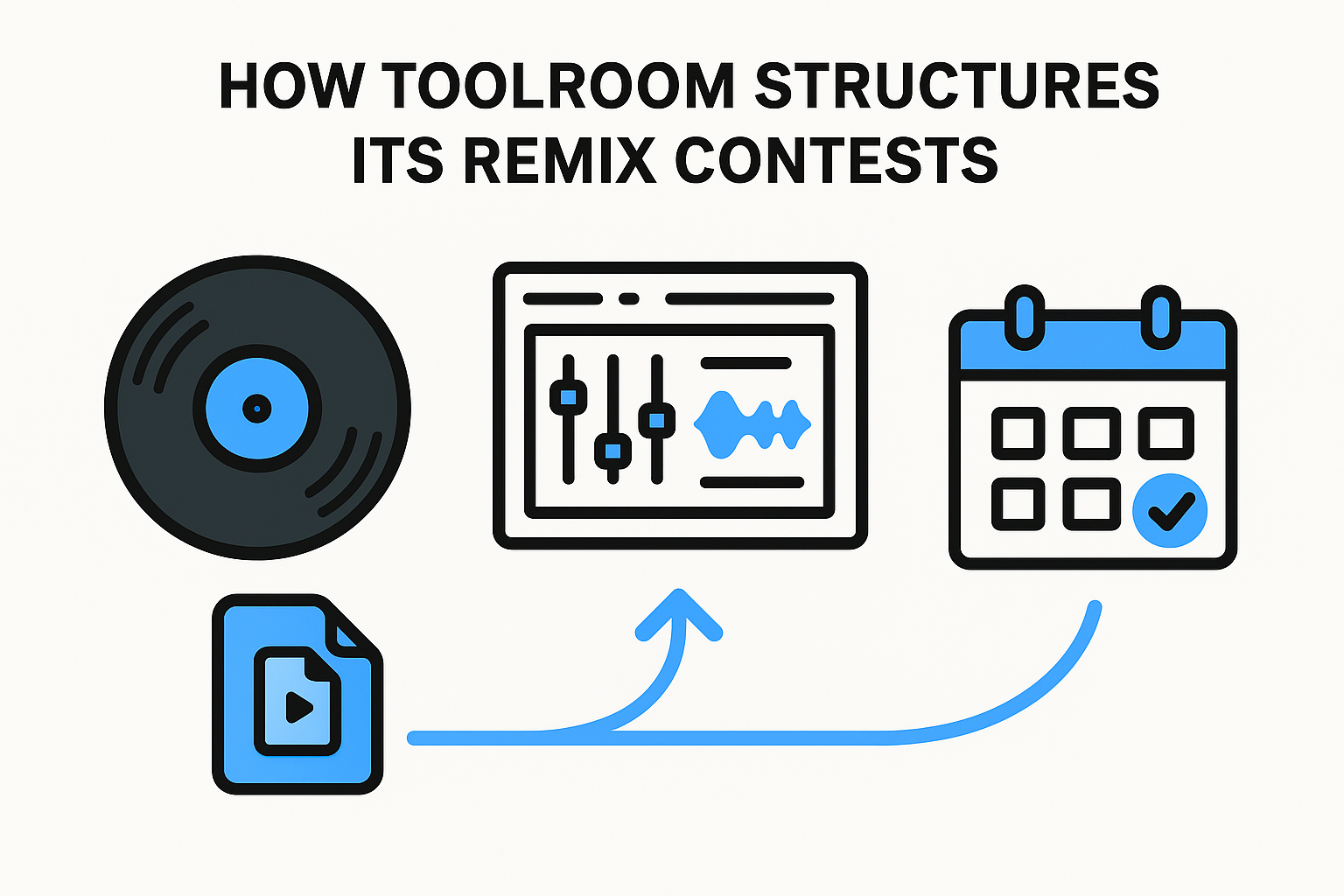
If you skip reading the official rules, you risk submitting in the wrong format or missing the deadline, and Toolroom will disqualify entries that don't meet their specifications.
What winning actually gets you
The prizes in a Toolroom remix contest carry real weight in the electronic music industry. A first-place remix can receive an official release on Toolroom Records, putting your name on a globally distributed track alongside one of the most recognized house and tech house labels in the world. Toolroom Academy contests often layer in production mentoring or course scholarships as part of the prize package. Here is a summary of what the typical prize tiers look like:
|
Prize Tier
|
What You Receive
|
|
Winner
|
Official release on Toolroom Records
|
|
Runner-up
|
Social media feature and playlist consideration
|
|
Academy contest winner
|
Production mentoring session or course scholarship
|
|
All valid entries
|
Potential judge feedback on your submission
|
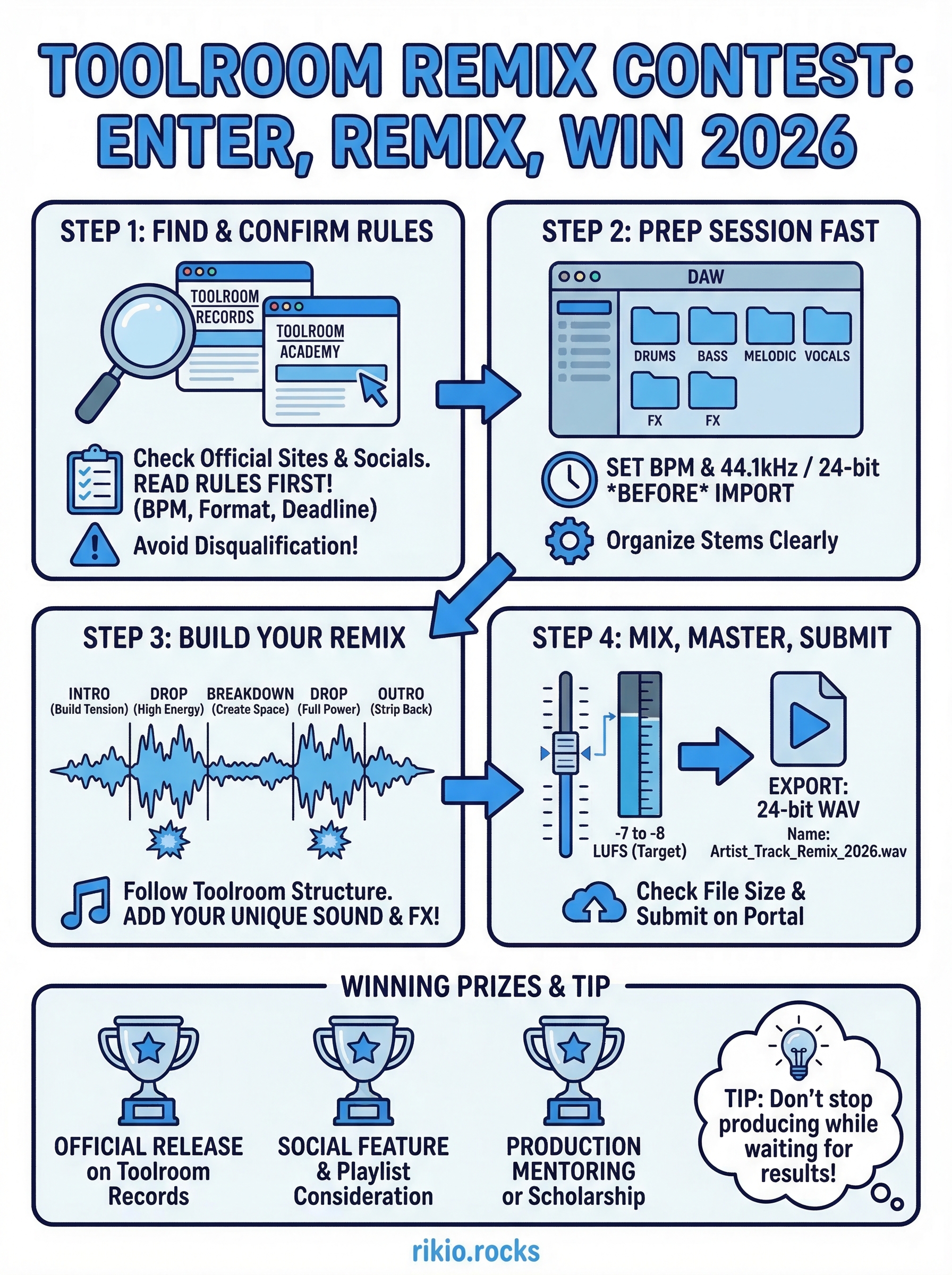
Step 1. Find the right contest and confirm the rules
Your first move is knowing exactly where to look. Toolroom posts active remix contests across their official website and through their social media accounts, but the details you need, including stem download links and submission deadlines, live on the specific contest page. Jumping into a remix before you've read the full rules is where most producers waste time.
Confirming the deadline and file format requirements before you open your DAW will save you from a last-minute scramble that damages the quality of your final submission.
Where active contests are listed
Toolroom runs contests through two separate platforms, and each platform posts independently. Check the Toolroom Academy portal for education-focused competitions and the Toolroom Records site for label remix contests. When a new contest launches, the announcement will include the track name, stem download link, and entry window dates. Set a reminder to check both pages at least once a week so you never miss an opening.
Here are the key places to monitor:
- Toolroom Records official website (label remix contests)
- Toolroom Academy portal (producer education contests)
- Toolroom official social media pages for launch announcements
What the rules actually cover
Every toolroom remix contest publishes a rules document alongside the stem pack. Read it before you download anything. The rules will specify accepted audio formats, BPM requirements, and length limits, plus whether you can add original elements beyond the provided stems. Write down the key specifications in a note so you have them in front of you while you work.
Step 2. Prep stems, tempo, and your remix session fast
Once you have the stems downloaded, your first task is to organize your session before you load anything into your DAW. Rename each file clearly so you know exactly what you're working with at a glance. A disorganized session slows you down and causes mistakes when you're deep in the creative process.
Set your project tempo and sample rate correctly
Open a new session in your DAW and set the BPM to match the tempo listed in the contest rules before you import a single stem. Most Toolroom tracks sit between 125 and 128 BPM, but always verify against the official stem documentation rather than guessing. Set your sample rate to 44.1 kHz and your bit depth to 24-bit, which matches the industry standard for electronic music production.
Getting the tempo wrong before you start building means every element you layer on top will drift out of sync, and fixing it later wastes hours you could spend on the actual creative work.
Organize your stem folders before you build
Label each stem channel clearly in your session from the start. A clean session template keeps your focus on the music rather than hunting for files mid-build. Here is a simple starting layout:
- Drums: kick, clap, hi-hats, percussion
- Bass: sub bass, mid bass
- Melodic: lead synth, pads, arps
- Vocals: lead vocal, ad-libs, chops
- FX: risers, impacts, atmospheres
This structure gives your toolroom remix contest entry a solid foundation from bar one, so you spend your session building instead of troubleshooting.
Step 3. Build a remix that sounds like you and fits Toolroom
The biggest mistake producers make in a toolroom remix contest is treating the stems like constraints instead of raw material. Your arrangement, sound design choices, and energy arc are what separate a memorable entry from a forgettable one. Use the stems as anchor points, not walls.
Lock your arrangement to the Toolroom format
Toolroom releases follow a recognizable pattern: a clean intro that builds tension, a drop that lands hard, and a breakdown that gives the track space before the second drop. Study two or three recent Toolroom releases before you structure your arrangement. Match the general energy arc without copying it note for note. A typical layout for a tech house remix looks like this:
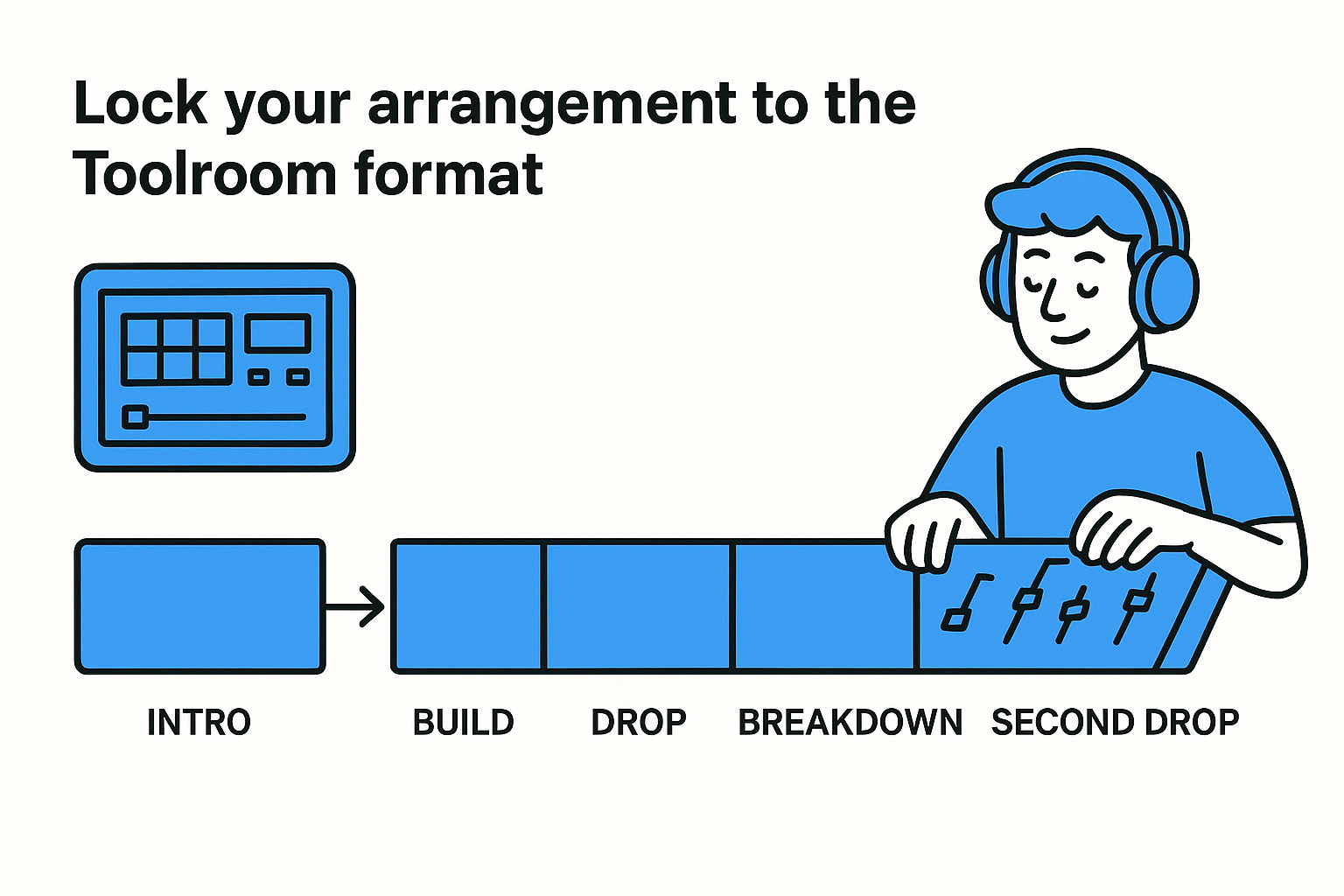
- Bars 1-16: intro, stripped back, kick and bass only
- Bars 17-32: build, layer in melodic elements
- Bars 33-48: drop, full energy, main hook
- Bars 49-64: breakdown, create tension
- Bars 65-80: second drop, full arrangement returns
- Bars 81-96: outro, strip back to close
Add your own sound without losing the label's identity
Your original synth patches, drum processing, and FX design are the exact elements that make judges stop and take notice. Pick one signature sound you designed yourself and build the mix around it. Keep your low-end decisions clean, because muddy bass is the fastest way to get passed over.
Judges listen to hundreds of entries, so one distinct sound you created yourself will do more for your submission than ten copied presets.
Step 4. Mix, master, export, and submit the right way
Your mix and master are the last things judges evaluate before they decide whether your entry advances, so getting them right is non-negotiable. A rough mix with clipping distortion or a weak low end will eliminate your submission before anyone registers your best creative choices. Set aside at least one dedicated session purely for mixing before you touch the export button.
Check your levels and loudness targets
Before you export, pull up a reference track from a recent Toolroom release and compare your loudness level directly against it. Most Toolroom releases land around -7 to -8 LUFS integrated, which is standard for club-ready tech house. Your final mix should sit in that range without the output peak crossing 0dBFS at any point.
A limiter on your master bus is fine for contest submissions, but avoid over-compression that crushes the dynamics out of your drop entirely.
Export specs and file naming for your toolroom remix contest entry
Use the exact file format listed in the contest rules, which is typically a 24-bit WAV at 44.1 kHz. Name your file clearly using this template so judges can identify your entry instantly:
ArtistName_TrackTitle_Remix_2026.wav
Once your file is ready, review the submission portal for any login requirements or file size caps before you attempt the upload. Some platforms limit uploads to 100MB, so check your file size in advance and confirm the rules permit a lower bit rate before you re-export.
Final checklist and next steps
Before you hit submit on your toolroom remix contest entry, run through these key submission requirements one last time to confirm nothing is missing:
- Stems imported at the correct BPM
- Sample rate set to 44.1 kHz, bit depth at 24-bit
- Arrangement length within the contest limit
- Loudness sitting between -7 and -8 LUFS integrated
- Export file named using the correct format
- File size confirmed within the portal's upload limit
Your next step is to submit and then keep producing. Waiting on results is not the time to stop working. Study recent releases, refine your sound design, and start preparing for the next opportunity. The producers who win are the ones who enter consistently, not just once. To keep your ear sharp between contests, check out the CARDIO HITS 2026 playlist on Spotify for high-energy electronic tracks that show you what drives a crowd and what makes a mix land hard.
560