8 Best Cameras for Shooting Music Videos: Budget to
Pro
A killer EDM track deserves visuals that hit just as hard. Whether you're an artist dropping a new single, a producer building your brand, or a creative shooting content for the scene, finding the best camera for shooting music videos can make or break the final product. At RIKIO ROCKS, we cover every corner of electronic dance music, and the gear behind the visuals is part of that story.
The camera market throws a lot at you: mirrorless bodies, cinema rigs, action cams, specs that blur together. Picking the right one depends on your budget, your skill level, and what kind of videos you're actually making. A lyric video for YouTube and a full-scale festival promo are two very different animals, and they call for different tools.
We put together a list of eight cameras worth your money in 2026, organized from budget-friendly picks for creators just getting started all the way up to professional cinema setups. Each recommendation breaks down what the camera does well, where it falls short, and who it's really built for, so you can skip the guesswork and get straight to shooting.
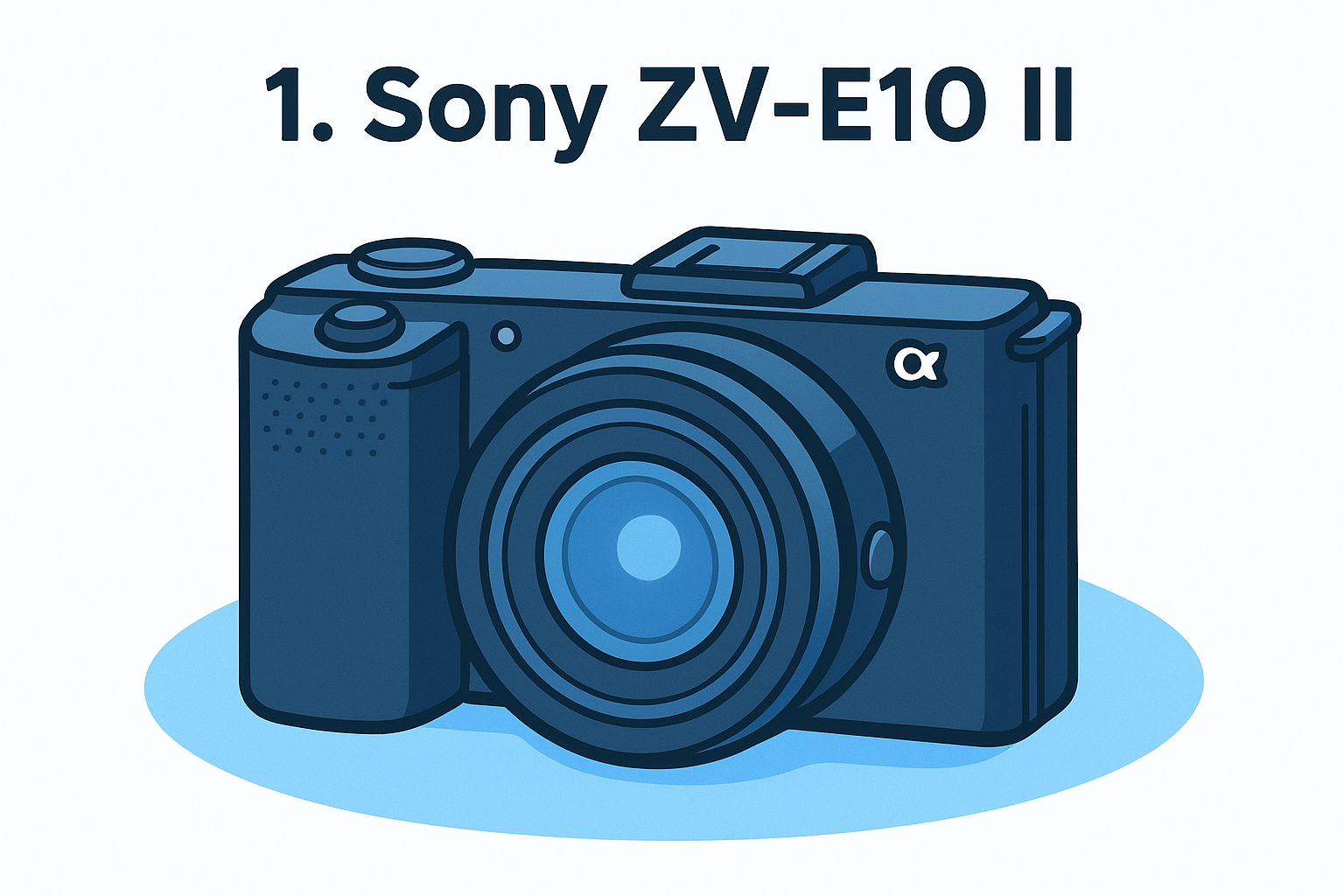
1. Sony ZV-E10 II
The Sony ZV-E10 II is the strongest entry-level pick on this list for anyone stepping into serious music video production for the first time. It shoots 4K up to 60fps with a 26-megapixel APS-C sensor and brings Sony's phase-detect autofocus system into a compact, affordable body. If you want a capable foundation for music video work without crossing the four-figure mark, this camera earns its spot.
Standout strengths
Subject tracking and face recognition on the ZV-E10 II are reliable enough to handle fast-moving performers under shifting stage lighting without constant manual refocusing. That alone saves you takes and editing time on performance shoots. Beyond autofocus, access to Sony's full E-mount lens ecosystem gives you room to grow, from budget primes to cinema-grade glass, without switching systems down the road.
If your shoots involve performers moving unpredictably under dynamic lighting, a strong autofocus system is not optional.
Pair this body with a fast prime lens and a gimbal, and you have a genuinely capable setup for the price.
Watch-outs
This camera has a few real limitations worth knowing before you buy. In-body stabilization is absent, so handheld shooting without a stabilized lens or gimbal produces shaky results fast. Rolling shutter in 4K 60fps mode is also noticeable during quick pans, which can undermine otherwise clean footage. Your color grading flexibility is narrower here than on Sony's cinema-line cameras, since Log profile options are limited on this body.
- No in-body optical image stabilization
- Rolling shutter visible at 4K 60fps
- Limited S-Log options vs. FX-series bodies
Best use cases
This camera fits independent artists and early-career content creators who need a clear step up from a smartphone but are not ready to invest in a cinema rig. Studio performance shoots, lyric videos, and YouTube-focused music content are where it performs best. Keep your expectations realistic about its limitations on fast handheld work, and it delivers solid results.
Typical price range
Body-only pricing for the Sony ZV-E10 II typically runs between $800 and $900 USD. Kit lens bundles push closer to $1,000 to $1,100. Check Amazon or Sony's official site for current availability and the most accurate pricing before you commit.
2. Canon EOS R50
The Canon EOS R50 is a strong contender if you want a beginner-friendly mirrorless camera with serious video chops at a reasonable price. It shoots 4K up to 30fps with a 24.2-megapixel APS-C sensor and gives you access to Canon's RF-S lens mount, which keeps the overall system cost manageable without locking you out of quality glass.
Standout strengths
Canon's Dual Pixel CMOS AF is one of the best autofocus systems in this price tier, and it shows on performance shoots where your subject keeps moving. Tracking stays locked and confident through complex lighting changes, which matters a lot in EDM visual production. The camera is also compact and light enough to work on a gimbal without fighting the balance.
A reliable autofocus system saves you from missed shots during live performance takes, and the R50 delivers that consistently.
Watch-outs
The R50 does not offer in-body image stabilization, which puts more pressure on your lens choice and any external rig you use. Overheating in extended recording sessions is also a documented concern, so long continuous takes in warm environments need careful management.
- No IBIS
- Overheating risk during long takes
- Limited Log shooting options at this price point
Best use cases
The R50 fits emerging artists and content creators who already own Canon glass or plan to invest in the RF ecosystem long-term. It handles studio performance clips and lyric videos cleanly and rewards creators who want a growth path within one camera system.
Typical price range
Expect to pay between $700 and $800 USD for the body only, with kit bundle options available on Amazon in the $900 range.
3. Panasonic Lumix GH7
The Panasonic Lumix GH7 is a Micro Four Thirds mirrorless body built around video performance. It records 5.7K open gate footage and handles 4K 60fps with well-controlled rolling shutter, making it a competitive mid-range option for anyone serious about finding the best camera for shooting music videos without crossing into full cinema territory.
Standout strengths
The GH7 gives you genuine Log shooting options and internal RAW video output, which translates directly to more control over your color grade in post. That flexibility matters when you're building a specific visual identity for an artist or label. In-body image stabilization also ships standard on this body, reducing your reliance on external stabilizers for handheld performance work.
Log shooting and RAW output on a mid-range body give you a color grading workflow that most cameras at this price point simply cannot match.
- 5.7K open gate recording
- Internal RAW video output
- Reliable IBIS for handheld work
- Strong rolling shutter control at 4K 60fps
Watch-outs
The Micro Four Thirds sensor produces a crop factor that narrows your field of view compared to APS-C or full-frame bodies, which affects wide shot composition in tight spaces. Low-light performance also trails larger sensor competitors, so dark club shoots or underground venue work may require additional lighting support.
- Smaller sensor limits low-light capability
- Crop factor affects wide-angle framing
Best use cases
Intermediate creators and small production teams who want professional-grade video specs without a full cinema budget will find the GH7 hits the right balance. It handles studio performance shoots, festival recap content, and artist branding videos cleanly when lighting conditions are controlled.
Typical price range
The Panasonic Lumix GH7 body typically runs between $1,700 and $2,000 USD. Check Amazon for current pricing and available bundle options.
4. Canon EOS R6 Mark II
The Canon EOS R6 Mark II sits at the upper-mid tier of this list and earns its place as one of the best cameras for shooting music videos when you need full-frame image quality in a capable hybrid body. It records 4K up to 60fps with a 24.2-megapixel full-frame sensor and Canon's Dual Pixel CMOS AF II system, which tracks moving subjects with real precision across shifting light conditions.
Standout strengths
Canon's autofocus on the R6 Mark II is one of its clearest advantages on a music video set. Subject and face tracking lock on confidently even in dramatic or low-light environments, and the full-frame sensor pulls in significantly more light than APS-C alternatives at the same ISO. In-body image stabilization ships standard and coordinates with lens-based stabilization on compatible RF glass, giving you smoother handheld movement without relying entirely on a gimbal.
Full-frame low-light performance expands what you can capture without building out a full lighting rig for every location.
Watch-outs
The 4K 60fps mode applies a sensor crop, which narrows your field of view during wide-angle performance sequences. Internal RAW video is not an option on this body, so compressed formats are your only in-camera recording choice at maximum resolution.
- 4K 60fps introduces a crop factor
- No internal RAW video recording
Best use cases
This body fits professional videographers and serious independent creators who need reliable performance across varied shooting environments. Your work could range from controlled studio sessions to outdoor festival coverage and live event promos, and the R6 Mark II handles both without major compromises.
- Studio performance shoots
- Festival and concert recap content
- Artist branding campaigns requiring full-frame depth of field
Typical price range
The Canon EOS R6 Mark II body typically runs between $2,300 and $2,500 USD. Check Amazon for current pricing and available kit bundles.
5. Sony FX30
The Sony FX30 crosses into Sony's Cinema Line without the full-frame price tag. It records 4K up to 120fps with an APS-C sensor built specifically for video-first shooters, and it brings S-Cinetone and S-Log3 color profiles directly into the body. For music video work, that combination of frame rate flexibility and genuine color science puts the FX30 in a different category than most hybrid cameras at a similar price point.
Standout strengths
Sony designed this body around video production workflows, and it shows in the physical build. You get a full-size XLR audio port, a dedicated cooling system for longer recording sessions, and direct integration with Sony's cinema-grade lens lineup through the E-mount. Phase-detect autofocus performs reliably across tracking scenarios common to performance shoots, including fast lateral movement and dramatic lighting transitions.
Dedicated cooling and XLR audio on a body this size removes two friction points that routinely slow down music video productions.
Watch-outs
The APS-C sensor means low-light performance falls behind Sony's full-frame FX3 at the same ISO, which matters on dark venue or underground club shoots. You will also notice that no in-body image stabilization ships with this body, so gimbal support or stabilized lenses are necessary for smooth handheld movement.
- No IBIS
- APS-C low-light ceiling lower than FX3
Best use cases
The FX30 is built for dedicated music video cinematographers and small production companies looking for the best camera for shooting music videos in controlled and semi-controlled environments. Studio performance content, artist promos, and label-funded visual projects are where it delivers the most value.
Typical price range
The Sony FX30 body typically runs between $1,700 and $1,900 USD. Check Amazon for current pricing and available bundle configurations.
6. Panasonic Lumix S5IIX
The Panasonic Lumix S5IIX builds on the S5II foundation and adds features that push it firmly into professional territory. It records 4K up to 60fps with a full-frame L-mount sensor, phase-hybrid autofocus, and internal RAW video output over HDMI, making it one of the more complete hybrid options available at its price point for serious music video work.
Standout strengths
Open gate recording and wired USB streaming ship standard on this body, which separates it from most competitors in the mid-to-upper range. You also get V-Log and V-Gamut color profiles built in, giving your color grade a professional starting point without external recorders. In-body image stabilization handles handheld movement well, and Panasonic's waveform monitor assists with exposure accuracy on set.
Internal RAW output over HDMI combined with V-Log color science gives you a post-production workflow that matches cameras costing significantly more.
Watch-outs
Phase-hybrid autofocus on this body trails Sony and Canon's tracking systems in speed and consistency, which shows up on fast-moving performance shoots. Subject tracking reliability drops during complex multi-performer sequences or rapid lighting changes, so manual focus pullers or additional takes may be necessary.
- AF tracking less reliable than Sony FX-series or Canon R6 Mark II
- Heavier body than comparable APS-C options
Best use cases
This camera is a strong pick if you're searching for the best camera for shooting music videos at the professional level without moving to a dedicated cinema body. Artist promos, label-commissioned content, and festival recap productions with controlled lighting benefit most from its full-frame output and color science.
Typical price range
The Panasonic Lumix S5IIX body typically runs between $2,000 and $2,200 USD. Check Amazon for current pricing and available kit configurations.
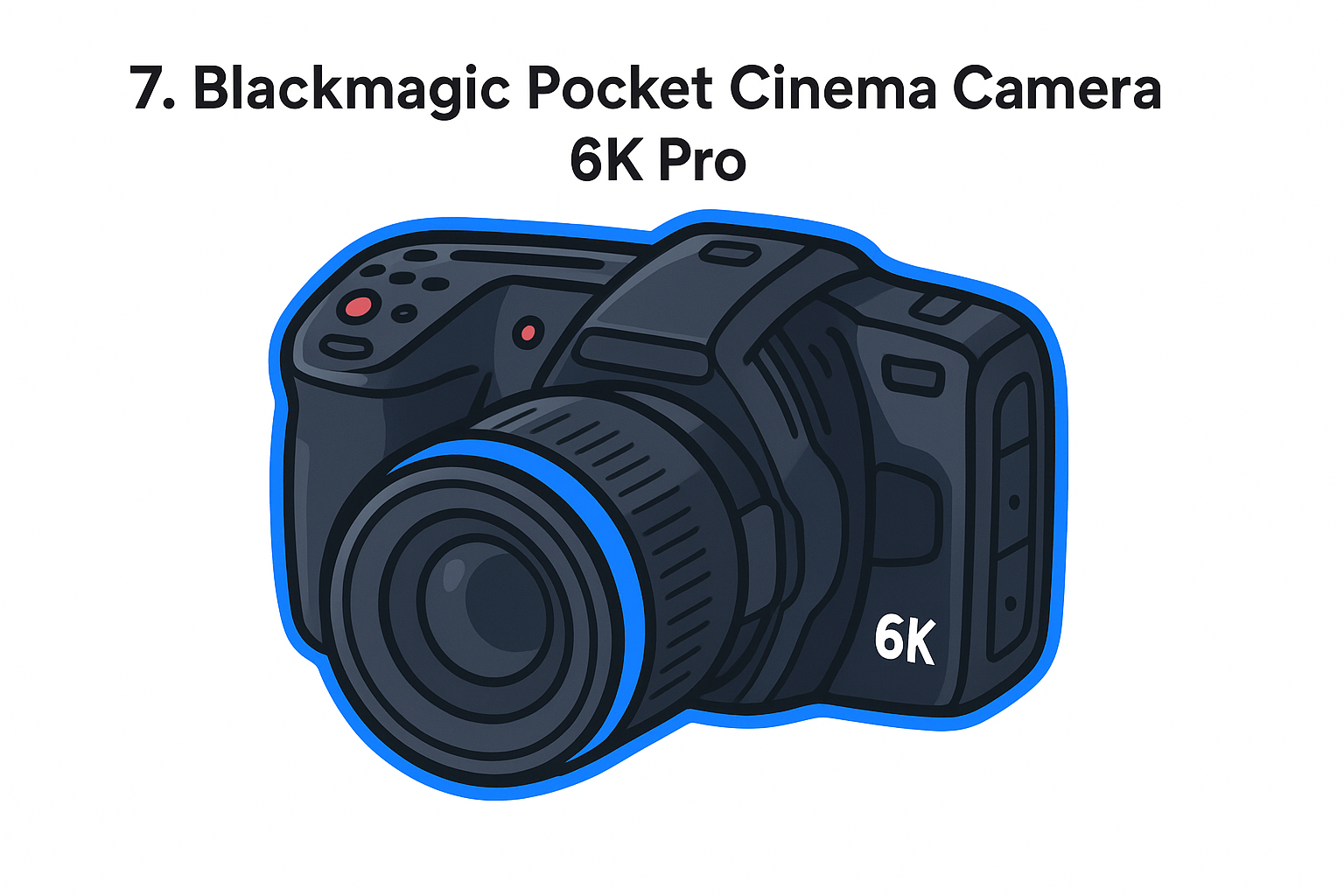
7. Blackmagic Pocket Cinema Camera 6K Pro
The Blackmagic Pocket Cinema Camera 6K Pro is built for filmmakers who want cinema-grade image quality without buying a dedicated cinema camera. It records 6K Blackmagic RAW with a Super 35 sensor, 13 stops of dynamic range, and built-in ND filters, giving you a genuinely professional toolkit for high-production music video work.
Standout strengths
Blackmagic RAW delivers a level of color grading flexibility that most hybrid cameras at any price point cannot match. The footage integrates seamlessly with DaVinci Resolve, which Blackmagic bundles in free with the camera, creating a complete production-to-post pipeline without extra software costs. Built-in ND filters also give you precise exposure control on location without carrying a separate filter kit.
Shooting in Blackmagic RAW gives your color grade a dynamic range ceiling that puts this camera's output in a different league from compressed-format hybrid bodies.
Watch-outs
Manual focus is your only option on this body since autofocus is absent entirely, which means you need a dedicated focus puller or precise pre-focus marks for moving performer shots. The battery life is short relative to competitor bodies, so you should bring multiple batteries to any full-day production. No IBIS ships with this body either.
- No autofocus system
- Short battery life
- No in-body image stabilization
Best use cases
This is the best camera for shooting music videos when you prioritize cinematic image quality and have a crew to support the technical demands of the shoot. Narrative music videos and label-funded productions with a dedicated crew benefit most.
Typical price range
The BMPCC 6K Pro typically runs between $2,000 and $2,500 USD. Check Amazon for current pricing.
8. Sony FX3
The Sony FX3 is the top-tier pick on this list and sits at the professional end of Sony's Cinema Line. It records 4K up to 120fps with a full-frame sensor, S-Cinetone color science, and a build designed specifically for run-and-gun cinematic production. If you want the best camera for shooting music videos at a professional level without moving to a shoulder-mounted cinema rig, the FX3 makes a strong case.
Standout strengths
Sony packed this body with features that remove friction on a real production set. Full-frame low-light performance at high ISO values holds up in dark club environments and underground venue shoots where other cameras on this list would struggle. You also get S-Log3 and S-Cinetone color profiles built in, phase-detect autofocus that tracks moving performers with precision, and a compact form factor that works on a gimbal without fighting balance.
A full-frame sensor combined with Sony's Cinema Line color science gives your footage an immediate visual weight that compressed hybrid cameras rarely match.
Watch-outs
No internal ND filters ship with the FX3, so you need external glass to control exposure in bright locations. The body also lacks a built-in fan, which creates overheating risk during extended continuous recording in warm environments.
- No internal ND filters
- Overheating risk on long continuous takes
Best use cases
The FX3 fits professional cinematographers and established production teams shooting high-budget artist promos, label campaigns, and festival visual content where full-frame output and cinema color grading are non-negotiable.
Typical price range
The Sony FX3 body typically runs between $3,500 and $3,800 USD. Check Amazon for current pricing and available configurations.
Your next step
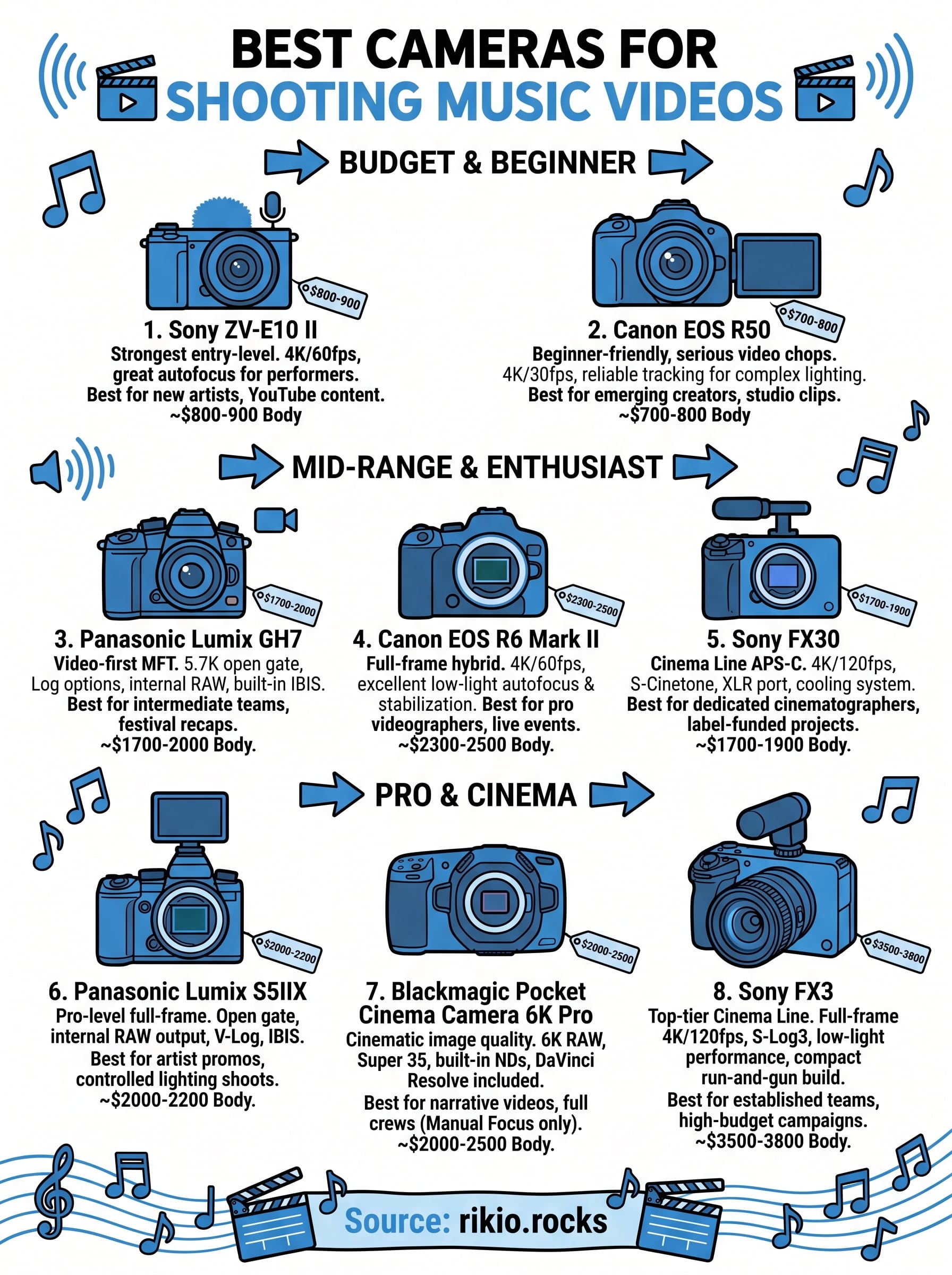
Eight cameras, eight different use cases. The best camera for shooting music videos depends on where you are right now: your budget, crew size, and shooting environment all shape which body actually makes sense. A beginner shooting solo artist clips on a tight budget has different needs than a production team running a full label campaign, and the right tool for each situation is not the same.
Start by narrowing this list down to two or three options that fit your current budget and typical shooting conditions. Rent before you buy if you can, and prioritize the specs that directly affect your specific production rather than chasing the most impressive number on a spec sheet. Great visuals come from knowing your gear, not owning the most expensive one.
While you're building your toolkit, keep your ear on what's moving in the EDM scene right now. Check out the CARDIO HITS 2026 playlist on Spotify and stay connected to the music driving the visuals.
10