EDM Artist: What It Is, Producer vs DJ, Roles &
Examples
An EDM artist creates electronic dance music using software, synthesizers, and digital tools. They craft original tracks that get people moving on dancefloors, at festivals, and through streaming platforms. Some EDM artists also perform live sets where they play their music and mix tracks for audiences. Think of producers like Skrillex or deadmau5 who build their own sounds from scratch and develop a signature style that fans recognize instantly.
The term often gets confused with DJ or producer because many electronic musicians wear multiple hats. You might hear someone called an EDM artist when they create original music, a producer when they're in the studio, and a DJ when they're spinning tracks at a club. This guide breaks down what separates an EDM artist from other roles in electronic music. You'll learn what they do both onstage and in the studio, how their creative process works, and what it takes to build a career making electronic music. We'll also look at different types of EDM artists with examples of real musicians who've shaped the genre.
Why it matters to define an EDM artist
The electronic music scene throws around titles like producer, DJ, and artist without clear boundaries. Understanding what is an EDM artist helps you appreciate the creative process behind the music and recognize the different skill sets at play. When you know who creates original tracks versus who mixes existing songs, you can better support the musicians whose work resonates with you. Fans often conflate these roles, leading to misconceptions about how electronic music gets made and performed.
Labels shape how the industry pays artists and how audiences discover new music.
Industry recognition and compensation
Payment structures and credit systems vary dramatically based on how musicians get classified in the electronic music world. Streaming platforms, festivals, and record labels treat producers differently than DJs. An artist who creates original EDM tracks earns royalties from composition rights, while a DJ performing live typically receives a flat performance fee. You'll also notice that festival lineups often separate "live" acts from DJ sets, with different billing and compensation structures. This classification determines everything from contract terms to how much control an artist has over their creative output. Understanding these differences helps you grasp why some electronic musicians focus solely on production while others balance studio work with live performances.
How to tell an EDM artist from a DJ or producer
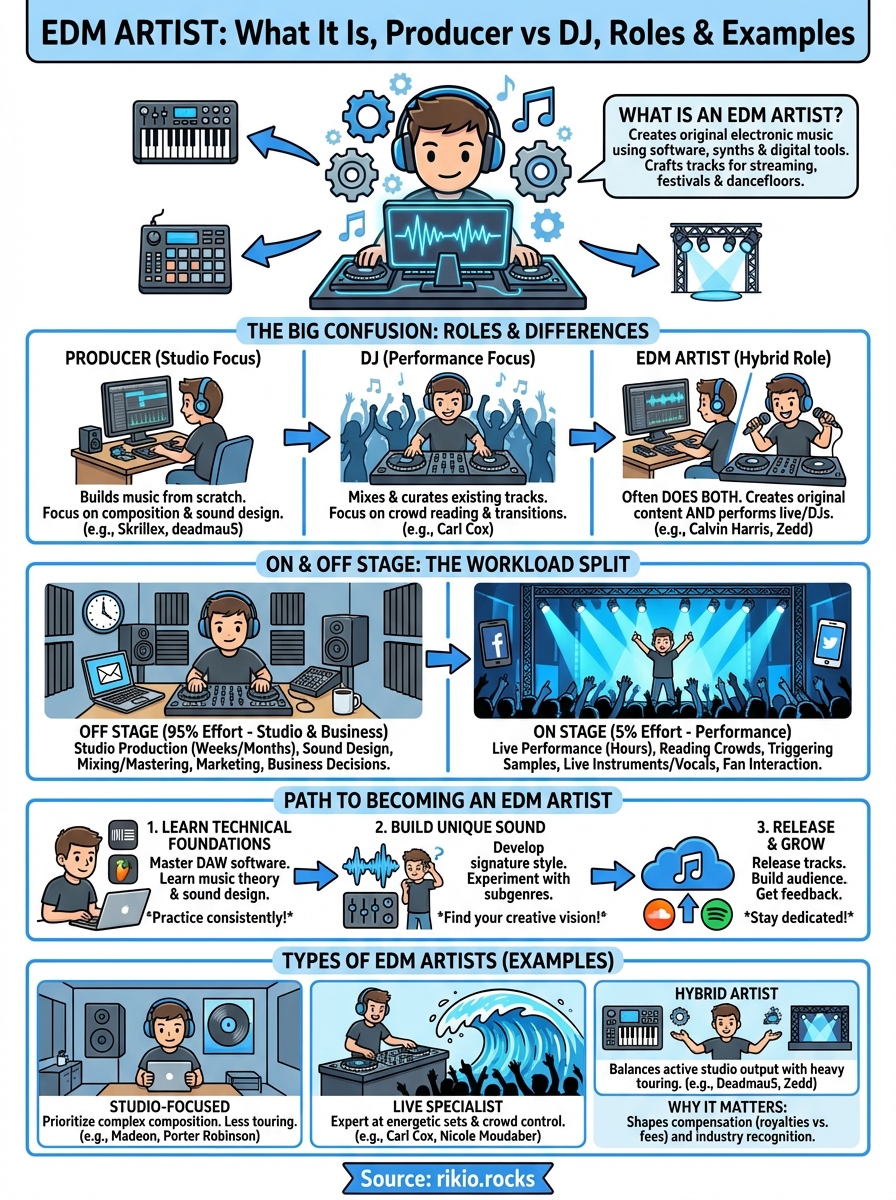
The lines blur in electronic music because many people do multiple jobs, but the core differences come down to what someone creates versus what they present. A producer spends hours in a studio building tracks from scratch using digital audio workstations and sound design techniques. DJs select and mix existing tracks for live audiences, reading the crowd and transitioning between songs. When you ask what is an edm artist, you're typically talking about someone who does both or primarily focuses on original composition rather than just mixing other people's work.
The creation vs presentation divide
Producers write the music you hear. They design sounds, arrange compositions, and export finished tracks that get uploaded to streaming platforms or pressed onto vinyl. DJs curate and present music. They select tracks, create transitions, and control the energy in a room by choosing what plays next. You can spot the difference by looking at credits on a release: producers get listed as composers and writers, while DJs often appear only on event posters and live recordings. Some musicians stick to one role throughout their careers, focusing solely on studio work or live performance.
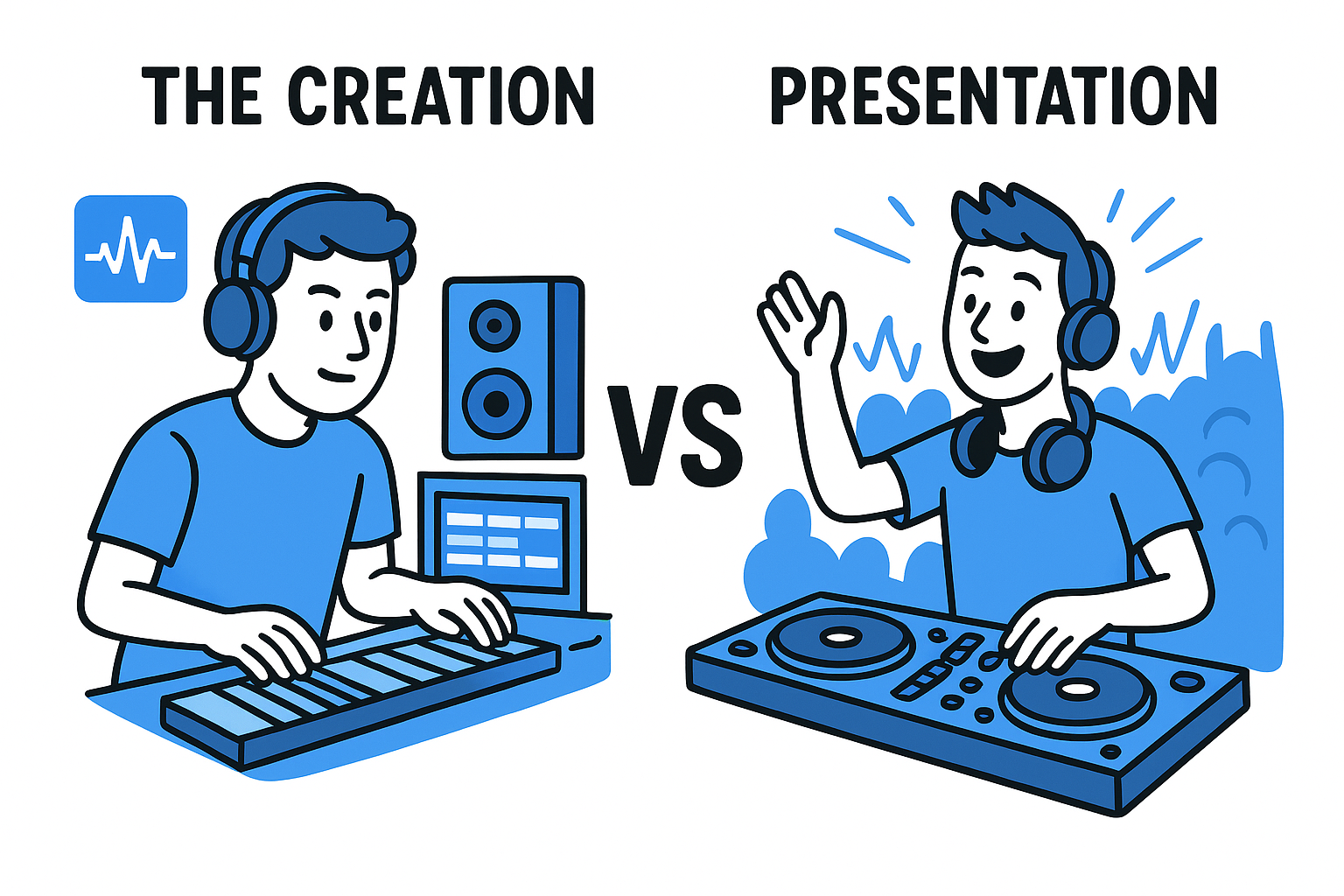
The real distinction lies in whether someone builds the original music or assembles existing pieces into a performance.
When roles overlap
Most successful electronic musicians today handle both production and performance. Artists like Calvin Harris produce their own tracks in the studio, then DJ sets that include their original music mixed with other songs. You'll find this hybrid approach dominant at festivals where headliners perform their own productions alongside crowd favorites from other artists. The term EDM artist typically applies to these multi-role musicians who create original content, even if they also DJ regularly.
What EDM artists actually do on and off stage
When you watch an EDM artist perform, you see only a fraction of their actual work. The stage performance represents maybe 5% of their total effort, while studio sessions, sound design, marketing, and business decisions fill most of their calendar. Understanding what is an edm artist means recognizing this split between visible and invisible labor. Artists spend weeks or months crafting a single track in their home studios or professional facilities, then perform it live for an hour or two at festivals. The creative process extends far beyond beatmatching and button pushing.
Studio production work
Behind closed doors, EDM artists build their tracks from the ground up using digital audio workstations. You'll find them experimenting with synthesizers, layering drum patterns, recording vocal samples, and adjusting EQ levels until every element sits perfectly in the mix. This process can take anywhere from a few hours for experienced producers to several weeks for complex compositions. Artists also handle mixing and mastering, which polish the raw recordings into professional releases ready for streaming platforms and radio play. Many spend additional time creating remixes of other artists' work or collaborating with vocalists and fellow producers.
The studio is where an EDM artist's true identity gets shaped through countless creative decisions.
Live performance elements
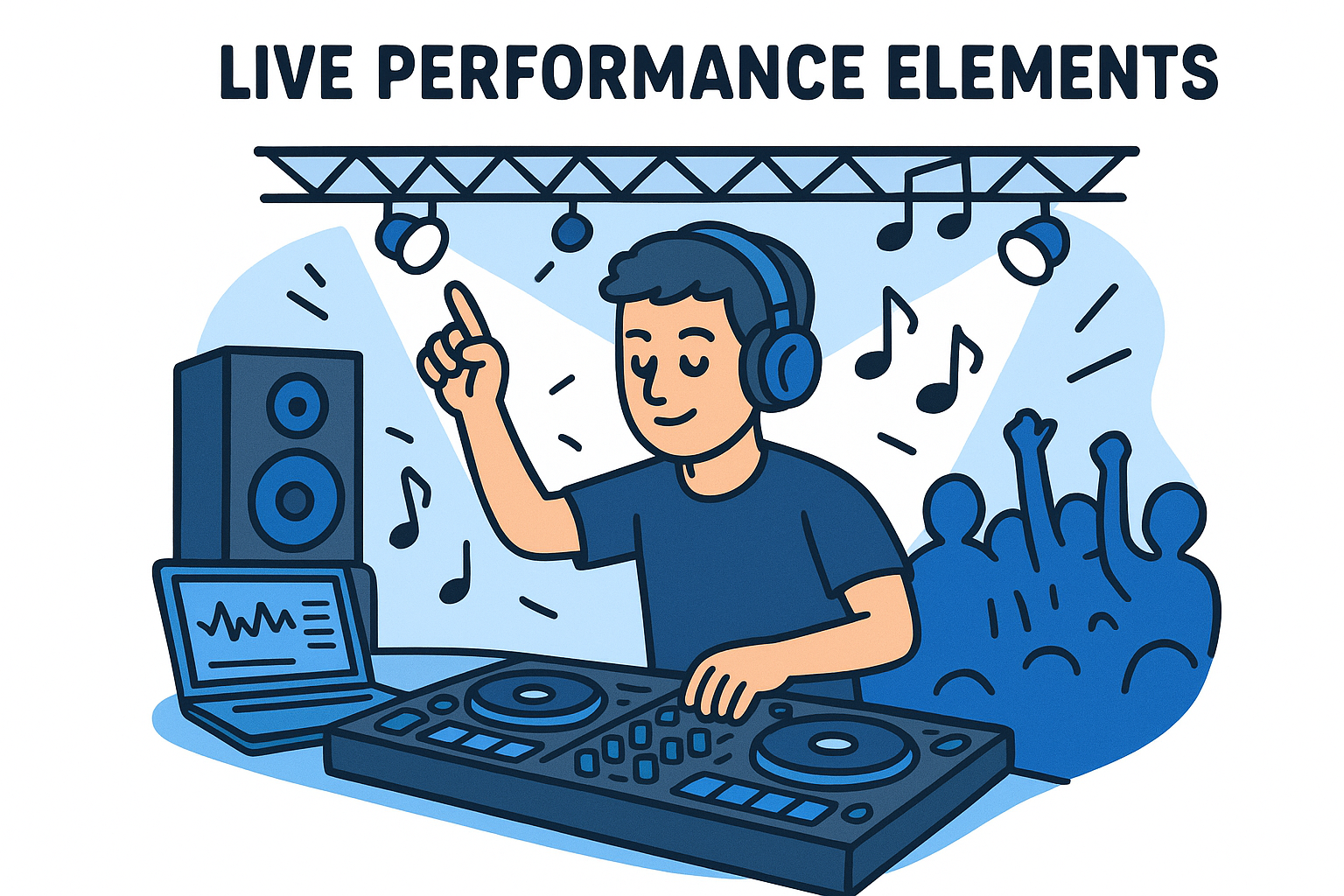
Onstage, artists read the crowd and adjust their setlists in real time based on audience energy. They trigger samples, manipulate effects, transition between tracks, and sometimes play live instruments or sing vocals over their productions. Modern performances blend pre-programmed elements with live mixing, giving artists control over how their music unfolds. You'll also see them filming content for social media, meeting fans after shows, and coordinating with venue staff about technical requirements. Between gigs, they promote upcoming releases, respond to label requests, and plan tour logistics that keep their careers moving forward.
Path to becoming an EDM artist
You don't need formal music training or expensive equipment to start making electronic music, but you do need dedication and willingness to learn technical skills. Most EDM artists begin by downloading a digital audio workstation like Ableton Live, FL Studio, or Logic Pro X, then spending hundreds of hours experimenting with sounds and watching tutorials. The journey from beginner to professional typically takes years of consistent practice, but you can release your first tracks within months of starting. Understanding what is an edm artist means recognizing that the role combines technical proficiency with creative vision, and both develop through hands-on experience rather than classroom theory.
Learning the technical foundations
Start by mastering your chosen DAW software and understanding basic music theory concepts like scales, chord progressions, and rhythm. You'll need to learn sound design, which involves shaping raw waveforms into the specific sounds your tracks require. Free online resources, YouTube channels, and producer forums provide enough information to build a solid foundation without paying for expensive courses. Practice recreating sounds from your favorite tracks to understand how professional producers achieve their results.
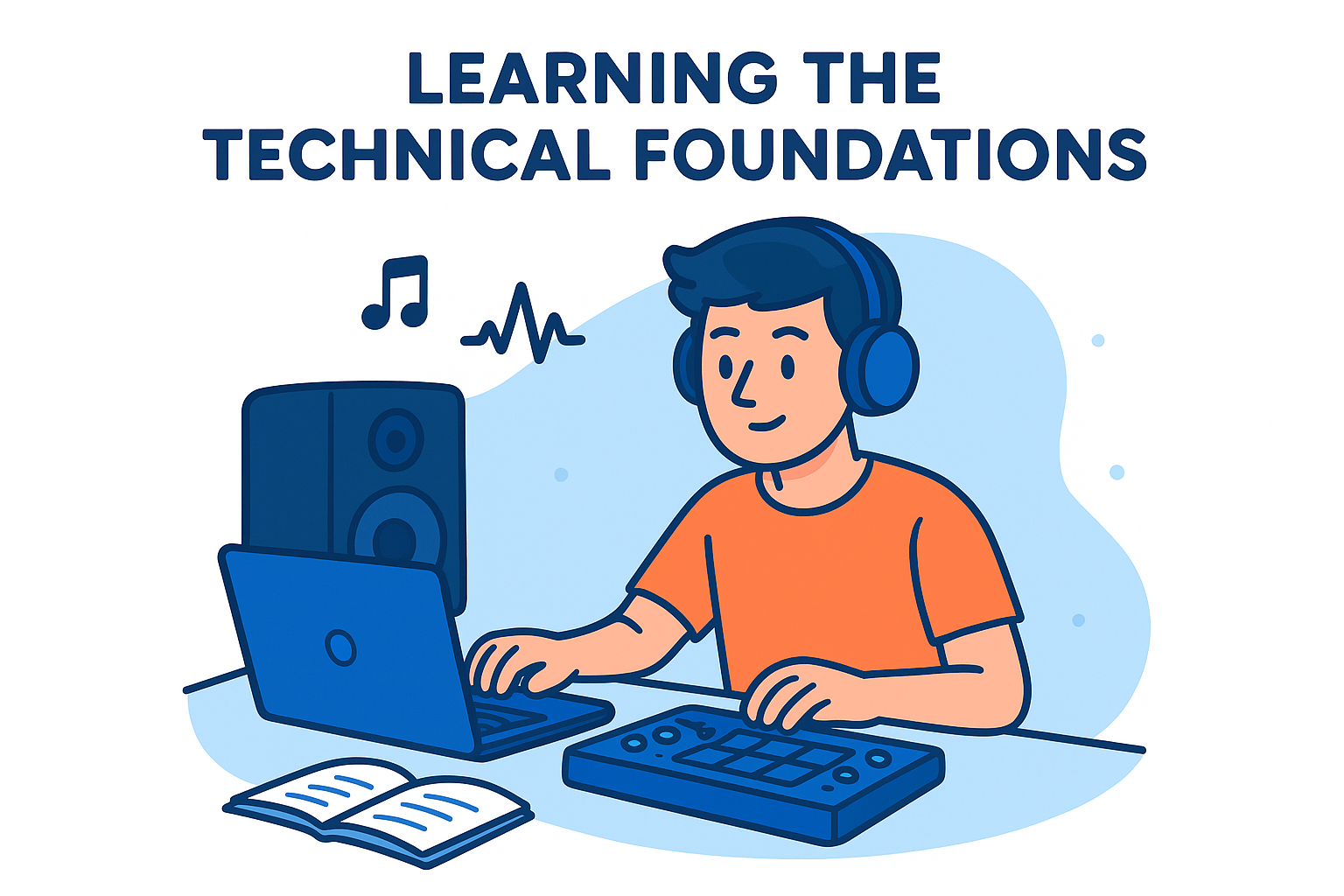
The fastest way to improve is by finishing tracks rather than endlessly perfecting one project.
Building your unique sound
After learning the basics, focus on developing a signature style that separates your music from thousands of other producers. Experiment with different subgenres, production techniques, and sound palettes until you find combinations that feel authentic to your creative vision. Release music consistently on platforms like SoundCloud and Spotify to build an audience and gather feedback that guides your artistic development.
Types of EDM artists with real world examples
The electronic music scene contains several distinct types of artists, each with different priorities and creative workflows. When people ask what is an edm artist, they're often unaware that the term covers musicians who operate in vastly different ways. Some focus entirely on studio production and rarely perform live, while others build careers around energetic stage performances. Many successful artists combine both approaches, creating original music and delivering memorable live experiences. Understanding these categories helps you recognize the diverse talents within electronic music and appreciate how each type contributes to the scene.
Studio-focused producers
These artists spend most of their time crafting original tracks and perfecting their production skills rather than touring extensively. Madeon built his reputation through meticulously produced tracks with complex arrangements and emotional depth. Porter Robinson creates elaborate studio albums that push electronic music's artistic boundaries, focusing on composition and sound design over constant club appearances. Artists like Jon Hopkins and Floating Points produce intricate electronic music that works better as recorded art than dancefloor material. They release music through labels, earn royalties from streams and sales, and occasionally perform special shows featuring their work.
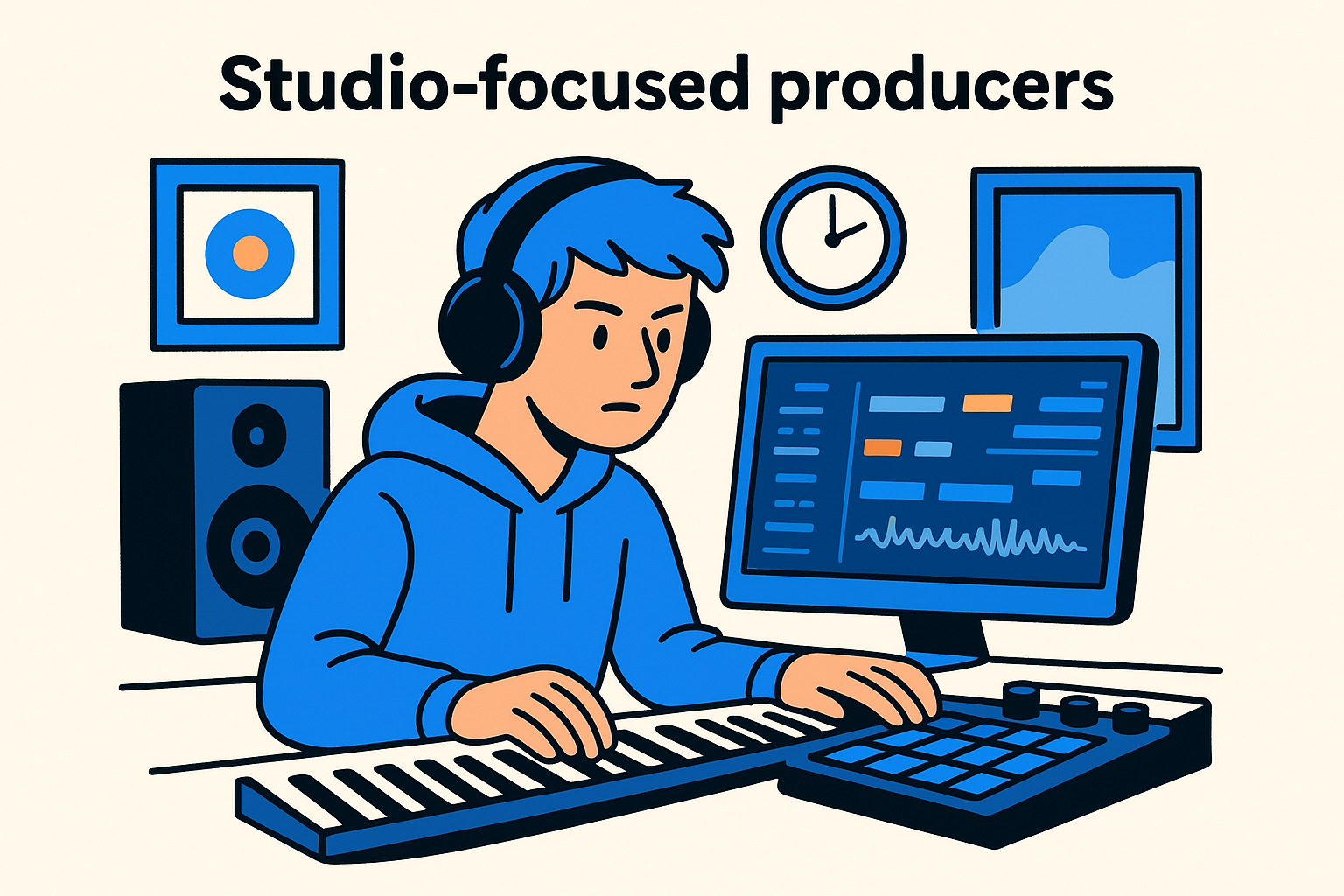
The studio becomes their primary creative space, where they shape sounds without the pressure of immediate crowd reactions.
Live performance specialists
DJs like Carl Cox and Nicole Moudaber excel at reading crowds and delivering energetic sets that keep dancefloors packed for hours. They build reputations through consistent touring, residencies at major clubs, and festival appearances rather than producing countless original tracks. These artists curate music from various producers and create seamless journeys through different styles and energy levels. Their skill lies in selection, timing, and technical mixing rather than composition.
Hybrid artist-performers
Artists like Deadmau5 and Zedd produce their own tracks and perform them live while also DJing sets that include other producers' music. They maintain active studio schedules alongside heavy touring calendars, balancing creative output with performance demands. This category includes most mainstream EDM artists you see headlining major festivals.
Closing thoughts
Understanding what is an edm artist goes beyond simple labels and job titles. You've learned that these musicians combine technical production skills with creative vision to build the tracks that define electronic music culture. Whether they focus on studio work, live performance, or blend both approaches, EDM artists shape how millions of people experience music at festivals, clubs, and through streaming platforms. The path to becoming one requires dedication, consistent learning, and willingness to develop a unique sound that sets you apart from countless other producers working in the same space.
Stay connected with the latest developments in electronic music by visiting RIKIO ROCKS for daily news, artist profiles, and industry updates that keep you informed about the EDM scene.
6