12 Best Audio Interfaces For Home Studio Recording
(2026)
Whether you're producing your first EDM track or laying down professional-grade mixes, the best audio interface for home studio recording is the single most important piece of gear between your ideas and a finished track. It converts your analog signals into digital audio your DAW can actually work with, and the quality of that conversion shapes everything from your low-end punch to your high-frequency clarity. Choosing the wrong one means fighting your equipment instead of making music.
At RIKIO ROCKS, we cover the EDM scene from every angle, the artists, the festivals, and the tools producers use to create the music that moves the culture forward. Audio interfaces sit at the foundation of every home studio, and we've seen firsthand how the right setup can take a bedroom producer from rough demos to release-ready tracks that land on major playlists.
The problem is there are dozens of options at every price point, each promising studio-quality results. Some deliver. Many don't. We put together this list of 12 audio interfaces that actually earn a spot in a home studio, from affordable units perfect for solo producers to multi-channel powerhouses built for more complex sessions. Each pick was evaluated on sound quality, latency, driver stability, build, and real-world value for the money. By the end, you'll know exactly which interface fits your workflow, your budget, and your goals.
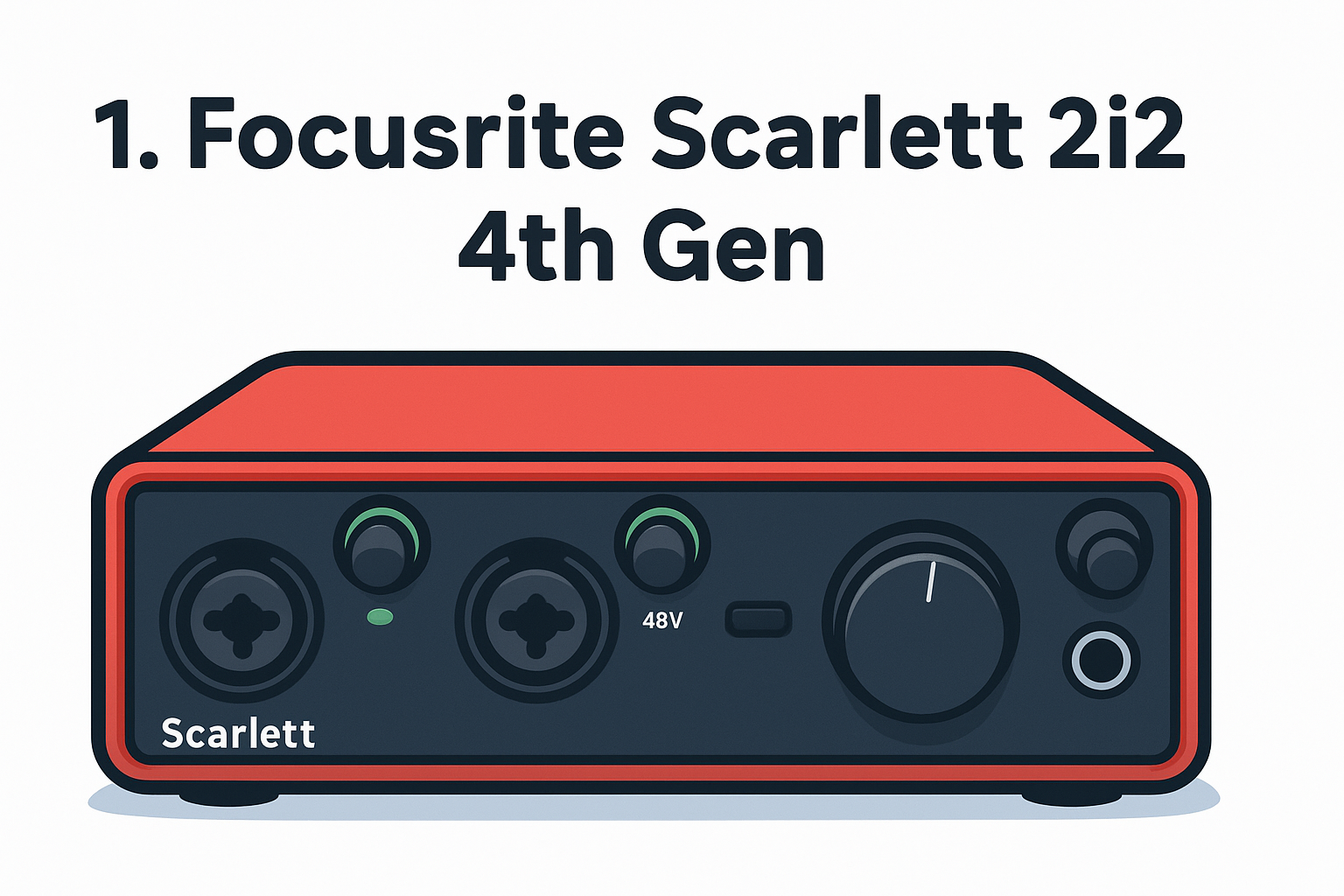
1. Focusrite Scarlett 2i2 4th Gen
The Scarlett 2i2 has held the top spot in the home studio market for years, and the 4th generation continues that streak. Focusrite refined an already solid design, adding improved preamps, a higher dynamic range, and a more intuitive hardware layout. If you're searching for the best audio interface for home studio use at an accessible price, this is the unit most producers end up pointing to first.
What you get
The 4th gen Scarlett 2i2 delivers two combo XLR/TRS inputs, each with its own gain knob, and two balanced TRS outputs on the back. Focusrite upgraded the preamps with Air mode, which adds a subtle high-frequency lift that mimics the transformer-coupled character of their ISA preamp range. You also get a dedicated headphone output with its own level control, a direct monitor mix knob, and USB-C connectivity for fast, stable data transfers.
Bundled software includes Ableton Live Lite and a rotating selection of plugins through Focusrite's plugin collective. Build quality is noticeably better than previous generations, with a sturdier metal chassis and more tactile knobs that hold their position firmly rather than feeling loose over time.
The 4th gen dynamic range of 111dB on the inputs puts it ahead of nearly every interface in its price range.
Best for
This interface is built for solo producers and singer-songwriters who need a clean, reliable two-channel setup. It handles vocals, guitars, synthesizers, and electronic drum machines equally well. If your sessions center around one or two simultaneous inputs and you want a unit that connects and works without driver headaches or complicated setup steps, this is your interface.
EDM producers who track live vocals or hardware synths alongside programmed sequences will find this setup covers the majority of their recording needs without overcomplicating the signal chain or stretching the budget.
Watch-outs
Two inputs is the hard ceiling here, so if you plan to record multiple sources simultaneously or expand to a more complex hardware rig, you'll outgrow this unit quickly. There is no built-in MIDI I/O, meaning you'll need a separate MIDI solution or a USB-connected keyboard for hardware control. The headphone amp is functional but struggles to drive high-impedance headphones at satisfying volumes, which matters if you mix on cans rather than monitors.
Typical price in 2026
The Focusrite Scarlett 2i2 4th gen typically sells for around $159 to $179 through major retailers. Street price has stayed stable, and you will occasionally find it bundled with additional software or accessories at no extra cost. For the build quality and preamp performance delivered at this price point, nothing in the same category offers better value for most home studio setups.
2. MOTU M2
The MOTU M2 is a strong contender for any producer searching for the best audio interface for home studio use who wants audiophile-grade conversion without a high-end price tag. MOTU packed ESS Sabre32 Ultra DAC technology into this compact unit, the same converter platform found in significantly more expensive interfaces, and the result is clean, accurate audio reproduction that most competitors in this price range simply cannot match.
What you get
The M2 includes two combo XLR/TRS inputs, two balanced TRS outputs, and a headphone output with its own dedicated volume knob. What sets it apart visually and practically is the high-resolution LED metering across the front panel, displaying both input and output levels in real time, which is rare at this price and genuinely useful during tracking and mixing sessions.
The M2 achieves a dynamic range of 120dB on the outputs, putting it ahead of several interfaces that cost twice as much.
Best for
This interface suits detail-focused producers who want honest, transparent audio and reliable metering feedback during every session. If you mix down electronic tracks and need to trust what you hear through your monitors, the accuracy of these converters gives you a real advantage over budget interfaces that add color to the signal.
Your workflow benefits most here if you are working with synthesizers, samplers, and studio monitors, rather than relying heavily on high-gain microphone preamps.
Watch-outs
The preamps are clean but gain-shy for dynamic microphones, so if your setup includes a Shure SM7B or similar low-output mic, you may hit the ceiling before reaching a strong signal. There is also no bundled software suite, meaning the M2 is purely a hardware play with no added plugin value out of the box.
Typical price in 2026
The MOTU M2 typically runs around $169 to $189 through major retailers. Given the converter quality and metering package, that price point represents genuine value for any home studio setup.
3. Audient iD14 MKII
The Audient iD14 MKII is where the search for the best audio interface for home studio recording starts to move into professional territory. Audient built this unit around the same Class A console mic preamps found in their higher-end studio desks, delivering a warmth and headroom that budget interfaces cannot replicate at this size.
What you get
The iD14 MKII gives you two Class A console mic preamps, two front-panel instrument inputs, and an optical TOSLINK input that expands your total input count to ten channels when you pair it with an ADAT-enabled preamp. A JFET instrument input on the front panel accurately models real amplifier impedance, so direct guitar and bass tracking sounds noticeably more natural than on most interfaces at this price. A smooth scroll-wheel encoder handles monitor level and keeps your workflow clean during longer sessions.
Audient fitting console-grade preamps into a desktop unit at this price point makes the iD14 MKII a genuine step up from most two-channel options.
Best for
This interface suits producers who need clean, high-headroom preamps for recording live vocalists, guitarists, or acoustic instruments alongside synthesizers and samplers. If you plan to grow your setup over time, the ADAT expansion slot lets you add preamps without replacing your interface, which saves money down the road.
- Vocalists who need transparent, low-noise signal capture
- Producers planning to add outboard preamps via ADAT
Watch-outs
The iD14 MKII uses a USB-A connection, so you may need an adapter for newer laptops that only carry USB-C. The Audient Console app handles routing and monitor control, but some users find the mixer layout less intuitive than Focusrite's or MOTU's companion software.
- No MIDI I/O included
- Requires adapter for USB-C-only machines
Typical price in 2026
The Audient iD14 MKII typically sells for around $229 to $249 through major retailers. That price reflects the preamp quality and ADAT expandability, making it a smart buy for producers ready to move past entry-level gear.
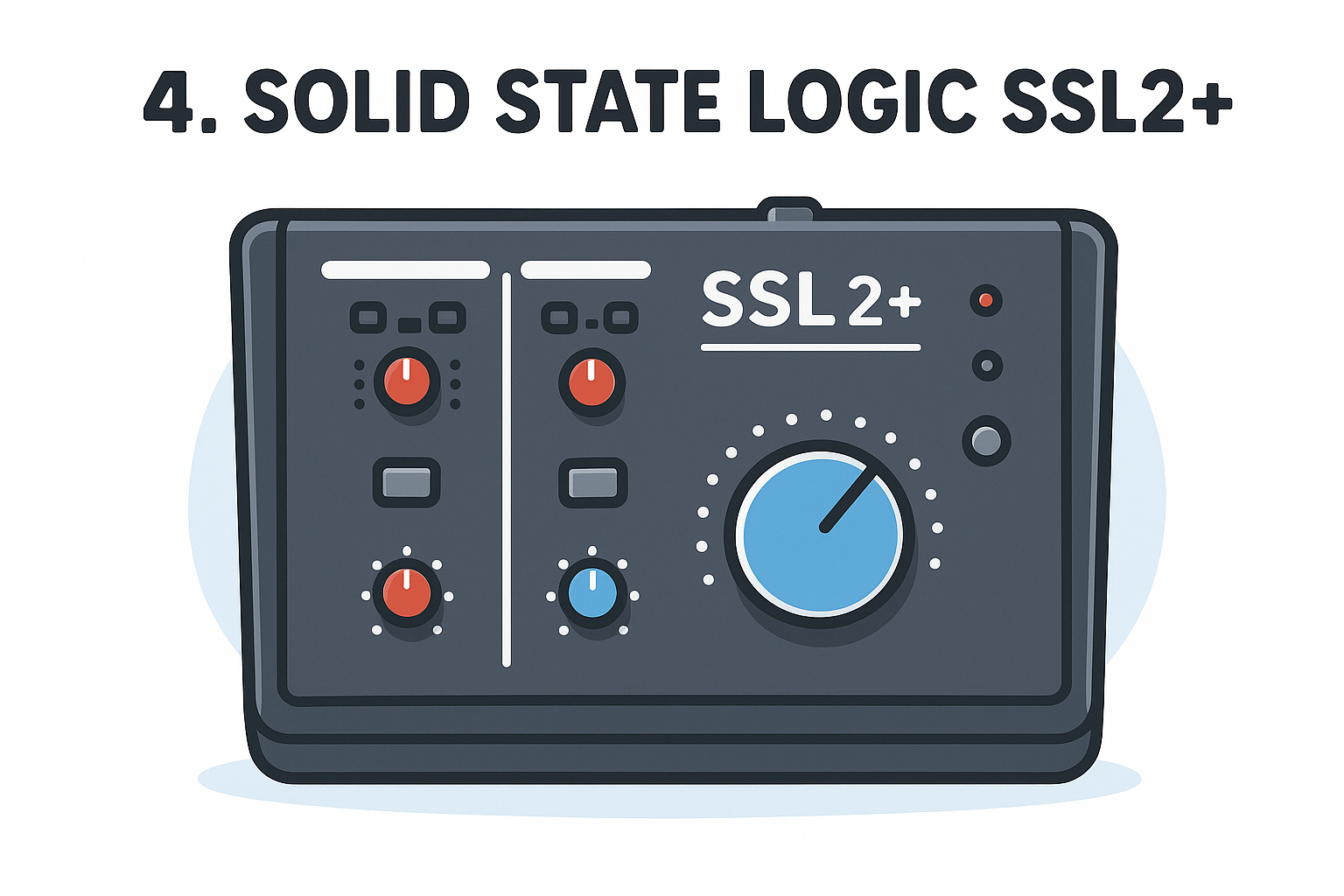
4. Solid State Logic SSL2+
SSL is one of the most respected names in professional audio, and the SSL2+ brings that legacy into the home studio at a price that makes it accessible without cutting corners on sound. If you're looking for the best audio interface for home studio recording with genuine analog character baked in, the SSL2+ delivers a punchy, defined signal that reflects decades of console engineering.
What you get
The SSL2+ ships with two SSL-designed mic preamps that carry the same Legacy 4K mode found on their high-end consoles, adding a gentle harmonic warmth and transient sharpening that makes vocals and instruments sit better in a mix from the start. You also get four outputs instead of the two you see on most interfaces in this range, which means you can run a second pair of monitors or route audio to outboard gear without a patchbay. MIDI I/O is included on the rear panel, a welcome addition at this price.
SSL packing four balanced outputs and MIDI I/O into a unit at this price point makes the SSL2+ one of the best-equipped interfaces in its category.
Best for
This interface suits producers who track vocals, synthesizers, and live instruments and want console-style coloration without committing to a hardware mixing desk. The four outputs also make it a strong pick for anyone running dual-monitor setups or switching between headphone mixes and speakers during long sessions.
Watch-outs
The Legacy 4K mode adds coloration by design, so if you prefer a completely transparent signal path, this character may feel like an unwanted variable. The headphone amp also lacks individual level control for each output, which can limit flexible monitoring configurations in more complex setups.
Typical price in 2026
The SSL2+ typically sells for around $229 to $249 through major retailers, representing strong value given the preamp quality and expanded I/O.
5. Universal Audio Volt 276
The Universal Audio Volt 276 stands out from every other option on this list because it puts a hardware analog compressor circuit directly inside the interface itself. If you're searching for the best audio interface for home studio recording with real analog signal processing built in, the Volt 276 delivers that through its onboard 76 compressor mode, modeled on UA's legendary 1176 hardware unit.
What you get
The Volt 276 includes two combo XLR/TRS inputs, two balanced TRS outputs, a headphone output, and a front-panel toggle that activates the onboard 76 compressor circuit on your input signal. This hardware compression shapes transients and adds punch to vocals, synths, and live instruments before the signal even reaches your DAW. You also get a Vintage mic preamp mode that applies harmonic warmth directly at the input stage, giving you two distinct tonal options for every recording session.
Getting hardware 1176-style compression at the input stage before your DAW is a capability you won't find in any other interface at this price.
Best for
This interface suits vocalists and producers who want to shape their performances during tracking rather than spending time correcting them in post. If you record live hardware synths, bass, or guitar and want analog compression influencing the signal from the start, the Volt 276 removes the need for a separate hardware compressor in your chain entirely.
Watch-outs
The onboard compressor gives you no parameter controls, so you get a fixed compression character rather than an adjustable tool you can dial in. You also get only two inputs total, which limits simultaneous recording to two sources at once.
Typical price in 2026
The Universal Audio Volt 276 typically sells for around $229 to $249 through major retailers, which is fair given the built-in analog compression hardware you receive at that price point.
6. Behringer U-Phoria UMC204HD
When budget is the primary concern, the Behringer U-Phoria UMC204HD is the most functional option on this list for producers who need the best audio interface for home studio recording without spending more than $60. Behringer stripped away extras and focused on delivering two clean inputs and reliable USB connectivity at a price point that most beginners can manage without hesitation.
What you get
The UMC204HD gives you two combo XLR/TRS inputs with MIDAS-designed mic preamps, which is the detail that separates this unit from other interfaces in its price range. Behringer acquired MIDAS, a respected British console manufacturer, and those preamp circuits bring noticeably better signal quality than what most budget competitors offer. You also get two balanced TRS outputs, a headphone output with level control, and MIDI I/O on the rear panel, which is a rare inclusion at this price.
Getting MIDI I/O and MIDAS-designed preamps in a sub-$60 interface makes the UMC204HD one of the most feature-complete budget options available.
Best for
This interface suits first-time producers and hobbyists who want to start recording without committing significant money to gear before they understand what their setup actually requires. If you need a low-risk entry point that handles vocals, guitars, and synths reliably, this unit does the job without surprises.
Watch-outs
Driver stability on Windows has been an inconsistent experience for some users, so checking for updated drivers before your first session matters more here than with other interfaces on this list. The build quality uses plastic heavily, and the unit feels less durable than any other option covered here.
Typical price in 2026
The Behringer U-Phoria UMC204HD typically sells for around $49 to $59 through major retailers, making it the most affordable pick on this list by a wide margin.
7. Arturia MiniFuse 2
The Arturia MiniFuse 2 brings a focused, well-built approach to home studio interfaces, earning its spot through reliable driver performance and a clean, predictable signal path, plus a companion app that gives you genuine routing control without demanding hours of setup time.
What you get
The MiniFuse 2 ships with two combo XLR/TRS inputs, two balanced TRS outputs, a front-panel headphone output with dedicated level control, and a loopback function built directly into the hardware. Arturia includes their MiniFuse Control Center software, which manages direct monitoring, gain staging, and output routing from one clean interface. The unit connects via USB-C and draws bus power from your computer, so no external power adapter is needed for standard desktop use.
The MiniFuse Control Center gives you more software-level routing flexibility than most interfaces at this price point offer without a separate mixer application.
Best for
This interface suits producers and creators searching for the best audio interface for home studio sessions who also need reliable loopback for capturing stream audio or recording live sets back into the DAW. Its compact build and bus-powered USB-C connection make it equally practical at a fixed desk or in a mobile performance setup.
- Producers who need loopback functionality built in
- Streamers and content creators tracking audio alongside music production
Watch-outs
The preamps perform cleanly for standard sources but show limited headroom with low-output microphones like ribbon or passive dynamic mics. Arturia's software also nudges you toward their own product suite, which can feel restrictive if you rely entirely on third-party hardware and plugins throughout your workflow.
Typical price in 2026
The Arturia MiniFuse 2 typically sells for around $109 to $129 through major retailers. That price places it in a competitive mid-budget bracket where it holds its own on build quality, features, and driver reliability.
8. Native Instruments Komplete Audio 2
The Native Instruments Komplete Audio 2 earns its place on this list through bundled software depth rather than hardware specifications alone. If you're hunting for the best audio interface for home studio production and want capable recording gear paired with a large instrument library from day one, this unit delivers that combination at a competitive price without requiring additional software spending to get your sessions running.
What you get
The Komplete Audio 2 ships with two combo XLR/TRS inputs, two balanced TRS outputs, and a front-panel headphone output with its own level knob. The preamps handle standard dynamic and condenser microphones cleanly within normal gain ranges. What separates this unit from comparable hardware is the Komplete Start software bundle, which includes over 2,000 sounds, instruments, and effects from Native Instruments, giving you a production-ready toolkit the moment you plug in.
Getting Native Instruments' Komplete Start library alongside capable hardware at this price point gives you more production tools per dollar than most competitors at this tier can offer.
Best for
This interface fits producers entering the Native Instruments ecosystem who want their hardware and software to feel connected from the first session. If you already use Maschine or Kontakt in your workflow, the Komplete Audio 2 integrates directly with those tools through NI's Native Access platform, keeping your library management and device setup unified under one application.
- Producers building their first plugin library alongside their hardware setup
- Beatmakers already invested in Native Instruments software tools
Watch-outs
The preamp gain range hits its ceiling early, and low-output microphones like passive dynamics will struggle to reach a clean signal level without an external preamp in the chain. Build quality relies heavily on plastic construction throughout, which feels less durable than similarly priced alternatives like the Arturia MiniFuse 2.
Typical price in 2026
The Native Instruments Komplete Audio 2 typically sells for around $99 to $119 through major retailers, which represents fair value given the hardware capability and bundled software package you receive at that price.
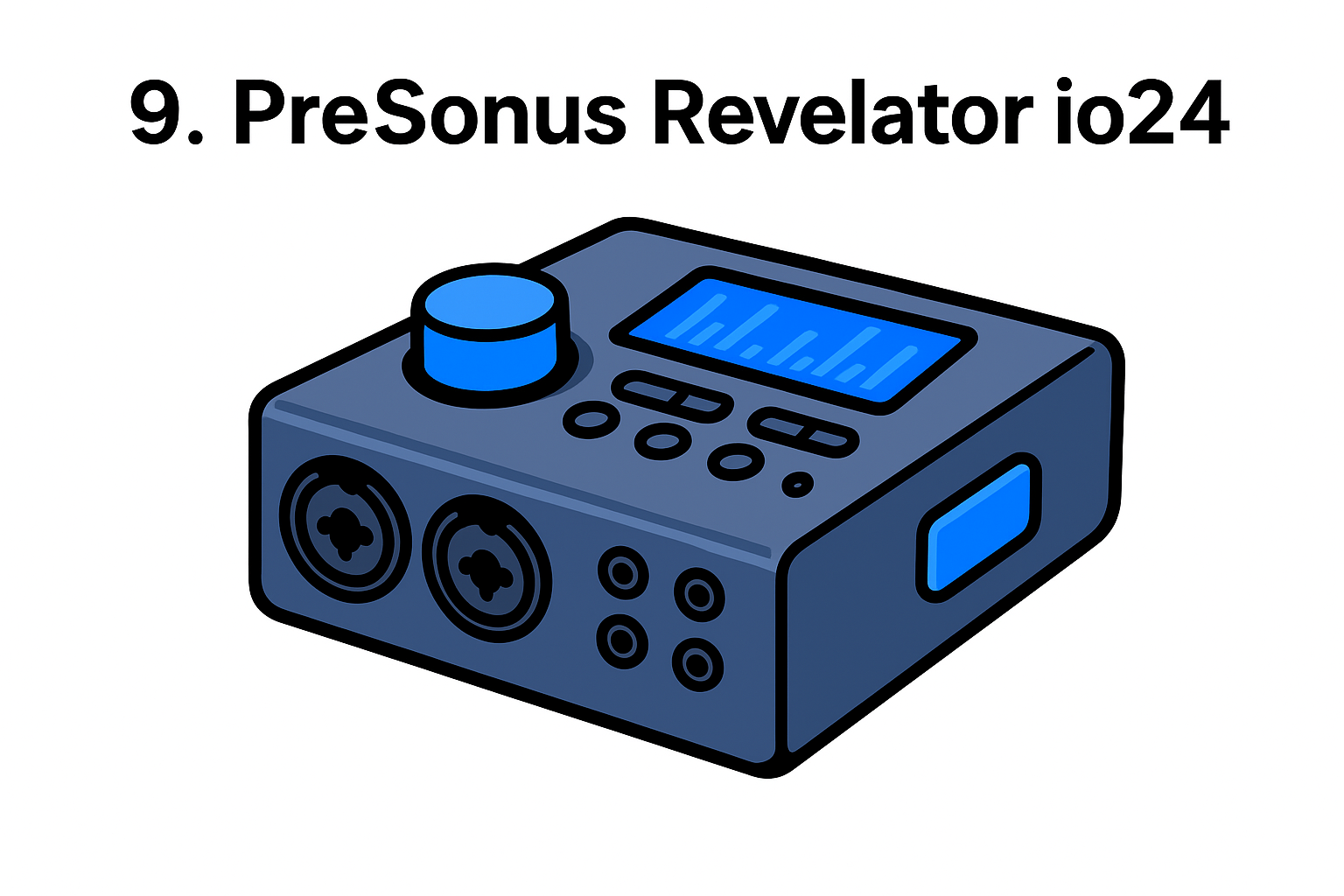
9. PreSonus Revelator io24
The PreSonus Revelator io24 earns its spot as one of the top choices for the best audio interface for home studio use by packing onboard DSP processing directly into the hardware, so you can apply real-time effects to your input signal without putting extra load on your computer's CPU during live sessions.
What you get
The Revelator io24 gives you two combo XLR/TRS inputs and four balanced outputs, along with a full onboard DSP mixer that runs reverb, compression, EQ, and noise gate processing directly on the unit itself. PreSonus includes their Fat Channel processing suite, which mirrors the dynamics tools found on their higher-end studio consoles. Loopback functionality is built in at the hardware level, and the unit ships with Studio One Prime and a bundled plugin collection to get your sessions producing results from the first day.
Running full Fat Channel DSP on your input signal without consuming CPU headroom is a capability you rarely find in interfaces at this price point.
Best for
This interface suits podcasters, streamers, and producers who want their monitoring signal processed and polished in real time without routing audio through multiple software layers. If your workflow involves live performance or streaming alongside standard recording sessions, the onboard DSP removes the need for separate effects hardware or complex low-latency plugin routing throughout your chain.
Watch-outs
The UC Surface control software adds real flexibility but carries a steeper learning curve than most companion apps in this price range. Your setup is also capped at two combo inputs, so expanding to more simultaneous sources means stepping up to a larger interface rather than scaling within this unit as your studio grows.
Typical price in 2026
The PreSonus Revelator io24 typically sells for around $149 to $169 through major retailers. The onboard DSP suite and integrated loopback capability make it a well-priced option for producers who want real-time signal processing without adding standalone hardware to their signal chain.
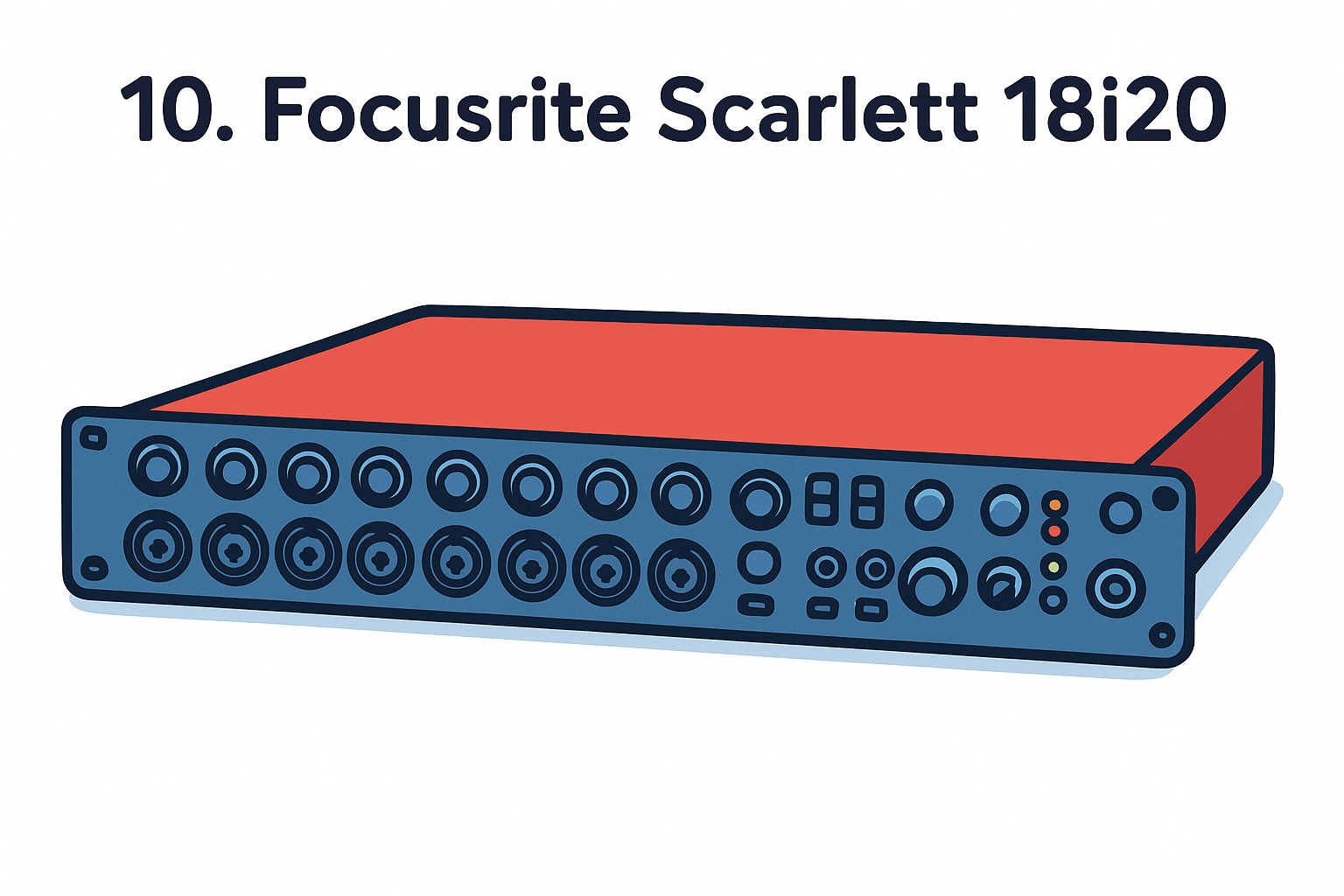
10. Focusrite Scarlett 18i20
When your sessions demand more channels than any two-input unit can deliver, the Focusrite Scarlett 18i20 is the natural next step for finding the best audio interface for home studio setups that have genuinely outgrown compact hardware. This is a full-rack, multi-channel interface built for producers who track live bands, full drum kits, or large hardware synth setups simultaneously.
What you get
The Scarlett 18i20 ships with eight combo XLR/TRS inputs on the front panel, each with its own gain control and 48V phantom power. You also get two ADAT optical inputs that expand your total input count to 18 channels when paired with external preamps, plus MIDI I/O and Word Clock for studio synchronization. Focusrite includes their Air mode on every input channel, and all eight preamps carry the same 4th gen circuit design found in the compact Scarlett models.
Getting eight channels of Air-mode-equipped preamps alongside full ADAT expansion and Word Clock at this price point makes the 18i20 one of the most complete interfaces in the mid-tier range.
Best for
This interface suits producers who record live musicians, multi-piece bands, or extensive hardware rigs where capturing multiple sources..
0