What To Wear To A Nightclub: Outfit Ideas + Dress
Codes
You've got the tickets, you know the DJ lineup, and the playlist is already stuck in your head, but figuring out what to wear to a nightclub can kill the vibe before you even leave the house. Whether you're heading to a warehouse rave or a bottle-service lounge, your outfit matters more than you think. At RIKIO ROCKS, we cover every corner of the EDM scene, and that includes the culture that surrounds it, starting with how you show up.
Dress codes vary wildly from one venue to the next. A laid-back club night in Austin won't expect the same thing as a rooftop party in Miami or a strict-door spot in Las Vegas. Your age, the season, and how formal the venue is all play a role in what works and what gets you turned away at the door. The good news? You don't need a stylist or a massive budget, just a clear idea of what fits the occasion.
This guide breaks down outfit ideas and dress code basics for both men and women, covering everything from casual club nights to upscale venues. We'll walk through seasonal picks, age-appropriate options, and the unwritten rules that bouncers actually enforce. By the end, you'll know exactly what to put on, and more importantly, what to leave in the closet.
Start with the club and the dress code
Before you open your closet, you need to know where you're going and what that venue expects. Figuring out what to wear to a nightclub starts with the club itself, not with trends or what your friends are wearing. A techno basement in Brooklyn runs by completely different rules than a high-end rooftop lounge in Chicago, and showing up in the wrong outfit can mean standing at the door while everyone else walks in.
Know the venue before you pick an outfit
Most clubs post their dress code on their website, their Instagram bio, or on the event listing. Check these sources first before you settle on anything. If you bought tickets through a platform like a club's own ticketing page, the event description usually mentions attire expectations. Look for words like "smart casual," "upscale," or "no sportswear," because these signal specific expectations that door staff actually enforce.
When you can't find a dress code listed anywhere, the venue's overall vibe tells you everything. Search the club's name and look at the photos on their social pages. Are people wearing leather and heels, or hoodies and sneakers? Are the photos from a dimly lit warehouse or a polished cocktail bar? That visual research takes five minutes and saves you from a frustrating door experience.
If you're unsure, always dress one level above what you think is needed. You can usually tone down an outfit on the way in, but you can't upgrade a plain t-shirt at the door.
Common nightclub dress codes explained
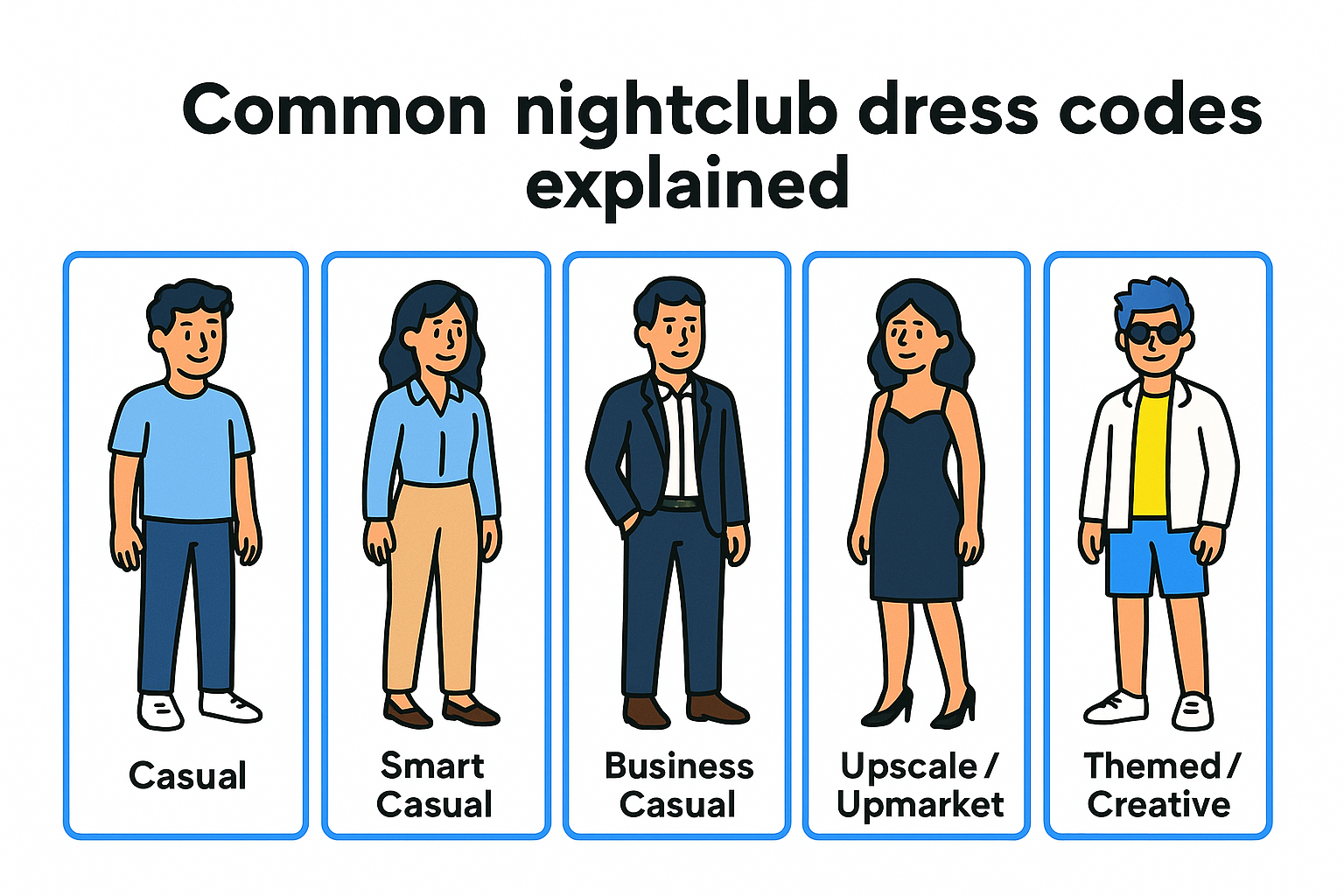
Dress codes have specific meanings, and knowing them takes the guesswork out of getting ready. Here's a breakdown of the most common ones you'll encounter:
|
Dress Code
|
What It Means
|
Examples
|
|
Casual
|
Relaxed, but clean and put-together
|
Dark jeans, clean sneakers, simple tops
|
|
Smart Casual
|
A step above casual, no athletic wear
|
Chinos, blouses, loafers, fitted dresses
|
|
Business Casual
|
Polished but not formal
|
Blazers, dress pants, heeled boots
|
|
Upscale / Upmarket
|
Dressy and stylish, no streetwear
|
Cocktail dresses, dress shirts, dress shoes
|
|
Black Tie Optional
|
Formal or near-formal
|
Suits, gowns, tuxedos
|
|
Themed / Creative
|
Follows a specific visual concept
|
Festival wear, neon, all-white, costume elements
|
Themed nights deserve special attention because they're common in EDM venues and club events. If the event has a theme, door staff often take it seriously. Showing up to an all-white party in dark clothes can get you turned away, even if your outfit is otherwise well put-together.
How venue type changes the rules
The type of club shapes everything about what's appropriate. A mainstream nightclub attached to a hotel or casino in Las Vegas will enforce a strict dress code and turn away anyone in athletic wear, open-toed shoes for men, or graphic tees. An underground EDM venue in a converted warehouse might have no formal dress code at all, but a strong unspoken aesthetic that regulars follow.
Smaller independent venues tend to be more lenient, while large-capacity clubs with bottle service, celebrity bookings, or prime city locations hold the line harder. If the club charges a premium cover or has a VIP section, treat the dress code as real and enforced. If it's a free or low-cost event in an arts district, you have more freedom, but you still want to look like you belong in the room and put thought into your appearance.
Build a nightclub outfit that lasts all night
Knowing what to wear to a nightclub is only half the battle. The other half is making sure your outfit still works at 2 AM after hours of dancing, heat, and movement. A great club outfit needs to hold up physically, not just look good in the mirror at home. That means thinking about fabric, fit, and function before you commit to anything.
Choose comfort without sacrificing style
Your outfit should let you move freely. Tight clothes that restrict your range of motion will wear you down fast, and anything that requires constant adjustment will pull your attention away from the night. Stick to pieces that fit well but give you enough room to move on the floor.
A practical formula that works for most club settings looks like this:
-
Base layer: A fitted top or dress that stays in place (not too tight, not too loose)
-
Bottom: Pants, skirt, or shorts that allow full leg movement
-
Shoes: A pair you can actually stand in for 3-4 hours
-
Outer layer: A light jacket or blazer you can tie around your waist or check at the coat check
The shoes are the most important comfort decision you make. If your feet give out by midnight, the rest of the night suffers regardless of how good the outfit looks.
Dress for the temperature swings
Clubs run hot on the dance floor and cold near the entrance or outdoor areas. Plan for both extremes rather than dressing for one. A light layer you can remove solves this without killing your look. A fitted blazer, a denim jacket, or a wrap works well because each adds style points while serving a real function.
Avoid heavy materials like thick wool or structured coats unless you're checking them. These become a burden the moment you get inside and the temperature rises.
Pick fabrics that hold up under heat
Breathable fabrics like cotton, linen blends, and moisture-wicking materials keep you comfortable on a packed dance floor. Avoid synthetic fabrics that trap heat or show sweat easily. Polyester and rayon blends can work for fitted dresses or dress shirts because they hold their shape, but pair them with breathable underlayers when possible.
Dark colors hide sweat better than light ones, which is worth factoring into your color choice if you plan to dance for most of the night.
Outfit ideas for women by club type and vibe
Figuring out what to wear to a nightclub as a woman depends heavily on the type of venue you're walking into. A one-size-fits-all approach doesn't work here. What lands perfectly at a dark techno club can look out of place at a rooftop bar, and vice versa. Matching your outfit to the setting shows awareness and gets you through the door looking intentional.
Casual and underground club nights
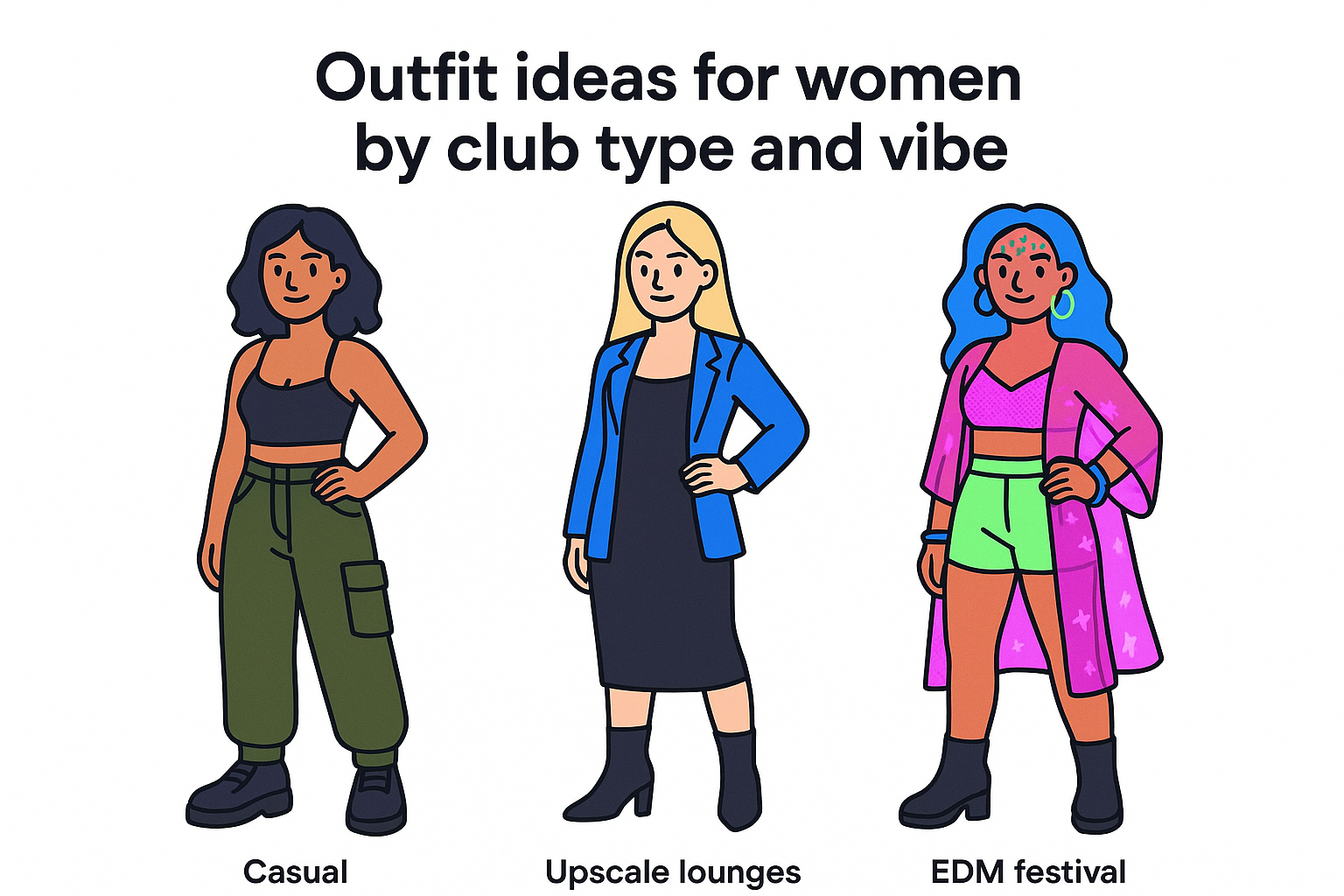
For casual EDM venues, warehouse raves, or underground nights, the priority is freedom of movement and a look that fits the subculture. Streetwear-adjacent pieces do well here, and you don't need to dress up. The crowd tends to value individuality over polish, so this is the space to experiment.
Good outfit choices for this setting include:
-
Cargo pants or wide-leg trousers paired with a crop top or fitted tank
- High-waisted bike shorts with an oversized graphic tee tucked in at the front
- A slip dress in a dark color worn over a fitted long-sleeve top
- Platform sneakers or chunky boots that handle a full night on a hard floor
Comfort is the real dress code at underground venues. If you can't move in it, leave it at home.
Upscale lounges and rooftop venues
Upscale clubs, hotel venues, and rooftop lounges call for a more polished approach. You don't need to go full formal, but the outfit should read as intentional and put-together. A fitted midi dress, a tailored blazer over a satin top, or a sleek two-piece set all work well and photograph cleanly under bright or ambient lighting.
Avoid anything too casual or too revealing at these venues. Door staff at upscale spots watch for guests who look out of sync with the environment. Stick to solid colors or minimal patterns, and choose heels or heeled boots over flat sneakers if the venue leans formal.
EDM festivals and themed nights
Festival-adjacent club nights and themed events give you the most creative flexibility of any setting. Neon colors, metallics, mesh overlays, and statement accessories all fit here. The key is still building around a cohesive base outfit rather than layering random pieces together.
Start with a solid foundation like high-waisted shorts and a bodysuit, then add themed elements on top. A sheer kimono, LED accessories, or bold face gems all work without taking over the whole look.
Outfit ideas for men by club type and vibe
Figuring out what to wear to a nightclub as a man comes down to reading the room before you arrive. Men's club fashion often gets reduced to "just wear a nice shirt," but that advice is too vague to actually help. Your outfit signals how seriously you take the occasion, and that matters everywhere from the door to the dance floor.
Casual and underground club nights
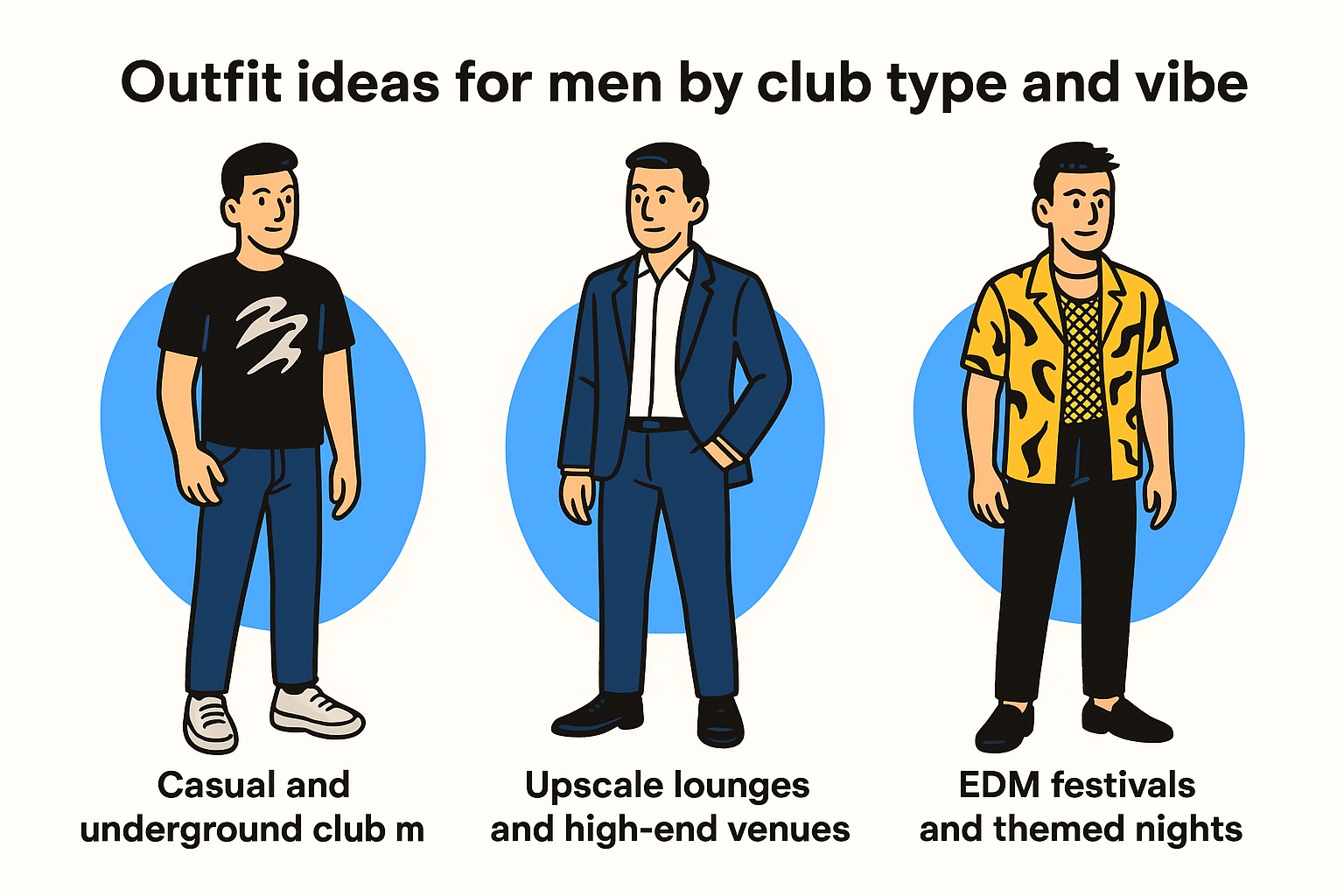
For underground raves, DIY venues, and casual EDM nights, comfort and authenticity take priority over formality. Your outfit should still look considered rather than thrown together at the last minute, even when there's no enforced dress code.
Strong choices for this setting include:
-
Dark slim or straight-leg jeans with a fitted graphic tee or simple crewneck
- Cargo pants with a tucked-in ribbed tank or a clean button-up left open over a tee
-
Black technical pants or joggers paired with an oversized hoodie or zip-up
- Chunky sneakers or clean leather high-tops in neutral colors
Avoid wearing anything brand new for the first time on a long night out. You want to know how your shoes feel before you're three hours deep into dancing.
Upscale lounges and high-end venues
High-end clubs, hotel bars, and rooftop lounges hold men to a stricter visual standard than most other venues. These spots regularly turn away guests in athletic shoes, shorts, or oversized casual wear. A polished look here means a tailored fit from collar to shoe, and the details count more than at any other venue type.
A reliable formula for upscale settings: dark trousers or well-fitted chinos paired with a tucked-in dress shirt or satin button-up, finished with leather dress shoes or clean Chelsea boots. A slim-fit blazer pushes the look further and signals effort, which matters at venues with bottle service where door staff apply a higher standard before letting anyone through.
EDM festivals and themed nights
Festival club nights and themed events give men more room to take risks with their outfits. Bold printed shirts, mesh tops, metallic jackets, or statement accessories all work when the event has a creative direction. The goal is to build around one standout piece rather than wearing several competing elements at once.
Keep your base outfit neutral if you plan to add something bold. A black base with one strong item reads as intentional. Multiple loud pieces layered together usually just reads as chaotic.
What not to wear and common door rules
Knowing what to wear to a nightclub matters just as much as knowing what to avoid. Door staff at most mid-range to upscale venues follow a short but firm checklist, and they make decisions fast. Understanding what gets people turned away saves you the frustration of planning a whole night around an outfit that doesn't make it past the entrance.
Items that get you turned away
Most clubs publish a banned items list alongside their dress code, but the categories below come up at nearly every venue with any kind of door policy. Even at more relaxed spots, these items raise flags.
The following items commonly result in denial at the door:
-
Athletic wear: basketball shorts, sweatpants, gym leggings, and track pants in most upscale or mid-range venues
-
Sports jerseys: team jerseys of any kind at clubs with smart casual or higher dress codes
-
Open-toed shoes for men: sandals and flip-flops at venues with enforced footwear standards
-
Overly torn or distressed clothing: jeans with heavy distressing or shredded hems at upscale spots
-
Graphic tees with offensive imagery: political slogans, explicit graphics, or anything door staff find aggressive
-
Work boots or steel-toed shoes: construction-style boots at most clubs outside of underground venues
-
Hoodies at upscale venues: acceptable at casual spots but frequently rejected at high-end clubs
If you're unsure whether a specific item crosses the line, swap it out for something safer before you leave the house rather than gamble on the door.
What door staff actually watch for
Door staff scan your full look from head to toe in a few seconds. They're not evaluating fashion, they're checking whether you fit the venue's image and whether your group looks like a potential problem. Effort matters visibly, meaning a wrinkled outfit or mismatched elements can work against you even when individual pieces are acceptable on their own.
Your shoes carry a surprising amount of weight in this scan. Clean, well-maintained footwear reads as intentional. Scuffed or visibly dirty shoes suggest the opposite, and at venues with strict door policies, that detail alone can tip the decision against you. Lay your full outfit on the floor before you leave and check it as a complete set rather than evaluating each item separately. That single habit catches most outfit problems before they become door problems.
Shoes, layers, and accessories that work
The details finish the outfit. When you're figuring out what to wear to a nightclub, most people spend their planning time on the main pieces and treat shoes, layers, and accessories as afterthoughts. That approach backfires consistently. A strong base outfit with weak finishing choices reads as incomplete to door staff and to anyone you meet inside, so it's worth giving these elements the same attention you give the rest of your look.
Shoes that hold up through the night
Your shoes carry your entire look and your entire body for several hours, so function and appearance need to work together rather than compete. A heel that looks great but fails by midnight ruins the night faster than any other single decision.
Use this guide to match your shoe choice to the setting:
|
Venue Type
|
Women
|
Men
|
|
Underground / Casual
|
Platform sneakers, chunky boots, clean trainers
|
Leather high-tops, chunky sneakers, clean trainers
|
|
Smart Casual / Mid-range
|
Block heels, heeled ankle boots, loafers
|
Chelsea boots, clean leather sneakers, loafers
|
|
Upscale / High-end
|
Strappy heels, pointed-toe flats, heeled boots
|
Dress shoes, leather Oxford shoes, Chelsea boots
|
|
Festival / Themed
|
Platform boots, colorful sneakers, strappy sandals
|
Statement sneakers, boots, clean canvas shoes
|
Clean shoes signal effort. Wipe them down before you leave the house, regardless of the venue.
Layers that handle temperature changes
Clubs shift between cold entrances and hot dance floors within minutes. A single layer worn indoors all night works at casual venues, but most settings benefit from something you can add or remove without disrupting the look.
The best layering options for a club setting are a fitted blazer, a leather or faux-leather jacket, or a satin bomber. Each one adds visual weight to an outfit while staying easy to remove and carry. Avoid anything bulky that requires a coat check visit, unless the venue provides one at the entrance.
Accessories that finish without overloading
One or two well-chosen accessories close the look without making it feel costume-heavy. A simple chain necklace, a clean watch, or a structured small bag works at most venues. For festival-adjacent nights, bolder pieces like cuffs, ear cuffs, or LED accessories fit the environment and add energy to an otherwise basic outfit.
Keep the rule simple: pick one statement accessory and keep everything else minimal. Stacking multiple loud pieces pulls attention in too many directions and makes an outfit look busy rather than intentional.
Wrap up and plan your next night out
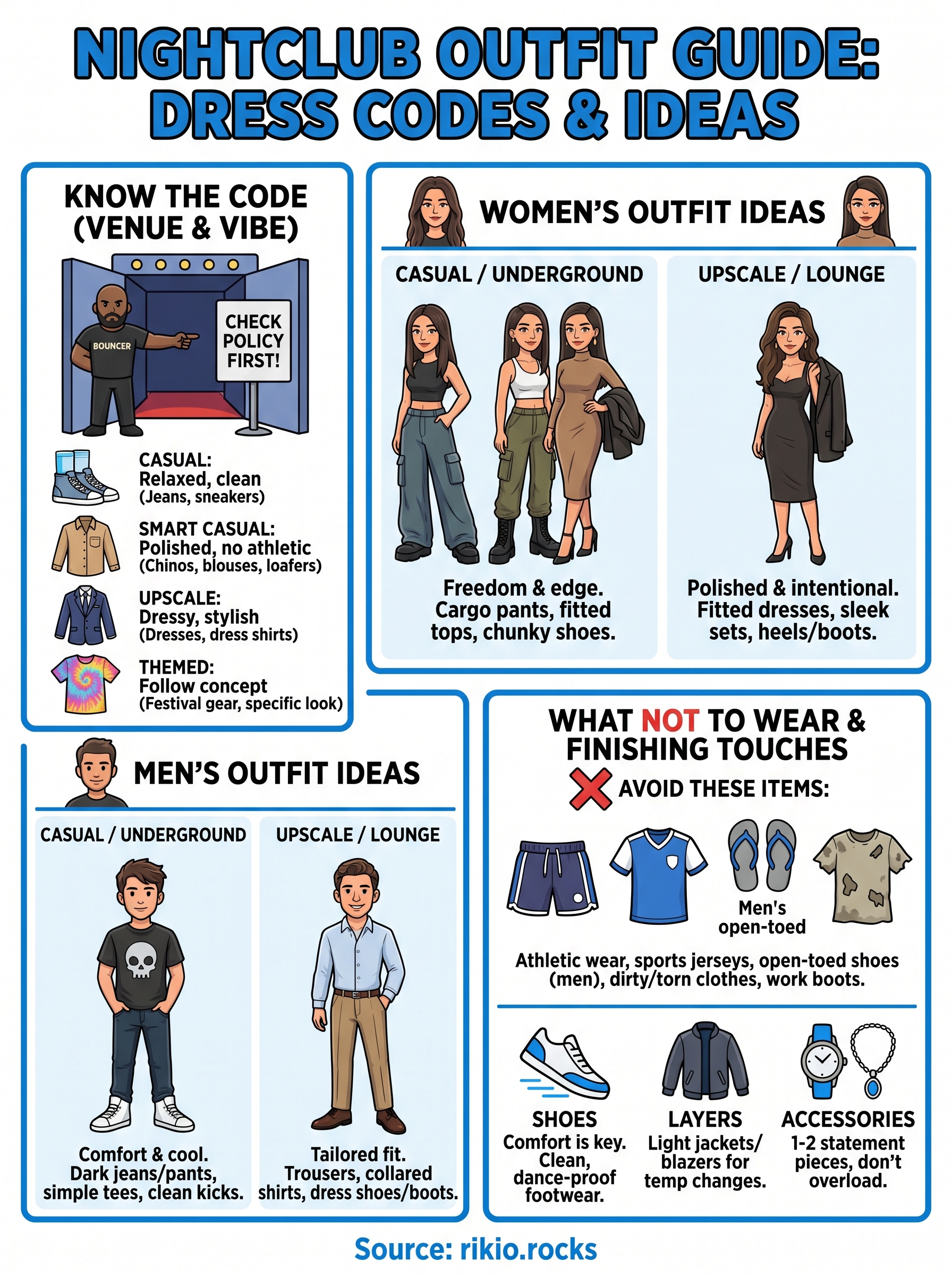
You now have a complete picture of what to wear to a nightclub, from reading the venue's dress code to choosing shoes that hold up past midnight. The process is straightforward once you break it into steps: identify the club type, match your outfit to the setting, and check the full look as a complete set before you leave.
Planning your outfit in advance takes the stress out of the night. Check the venue's dress code first, pick your base outfit next, then finish with shoes and one key accessory. That sequence works every time and keeps you from making rushed decisions at the last minute.
The right music sets the tone before you even get to the venue. Start building that energy early with our CARDIO HITS 2026 playlist on Spotify and stay current on the latest EDM news at RIKIO ROCKS.
26