How to Become an EDM Artist: From First Track to First
Gig
You hear a track that makes your chest thump and your body move. You think about making music like that yourself. Maybe you even imagine playing it live at a festival or club. But when you open a production software for the first time or look at DJ equipment, nothing makes sense. The buttons, knobs, and menus feel like an alien language. You want to create but have no idea where to begin.
Becoming an EDM artist is simpler than you think. You need a computer, music software, and a willingness to learn through practice. No expensive studio. No music degree. No industry connections. Just consistent effort and smart steps that build your skills from zero to performance ready.
This guide walks you through every stage of your journey. You'll learn what gear to buy, how to make your first tracks, ways to develop your unique sound, strategies for releasing music online, and methods for landing your first gigs. Each step builds on the last, giving you a clear path from curious beginner to confident artist ready to share your music with crowds.
What it really means to be an EDM artist
An EDM artist creates electronic dance music in a digital studio and performs it for audiences. You spend most of your time alone in front of a computer, building tracks from scratch using software instruments, samples, and effects. The work divides into two main activities: production (making the music) and performance (playing it live as a DJ or live act). Some artists focus entirely on production, others on DJing, but most successful EDM artists do both.
The core activities you'll master
Production forms the foundation of your work as an EDM artist. You open your Digital Audio Workstation (DAW) and build tracks by programming drum patterns, designing synthesizer sounds, arranging musical elements, and mixing everything together until it sounds professional. Each finished track takes anywhere from a few hours to several weeks, depending on your skill level and perfectionism. You repeat this process constantly, making track after track to improve your craft and build a catalog of original music.
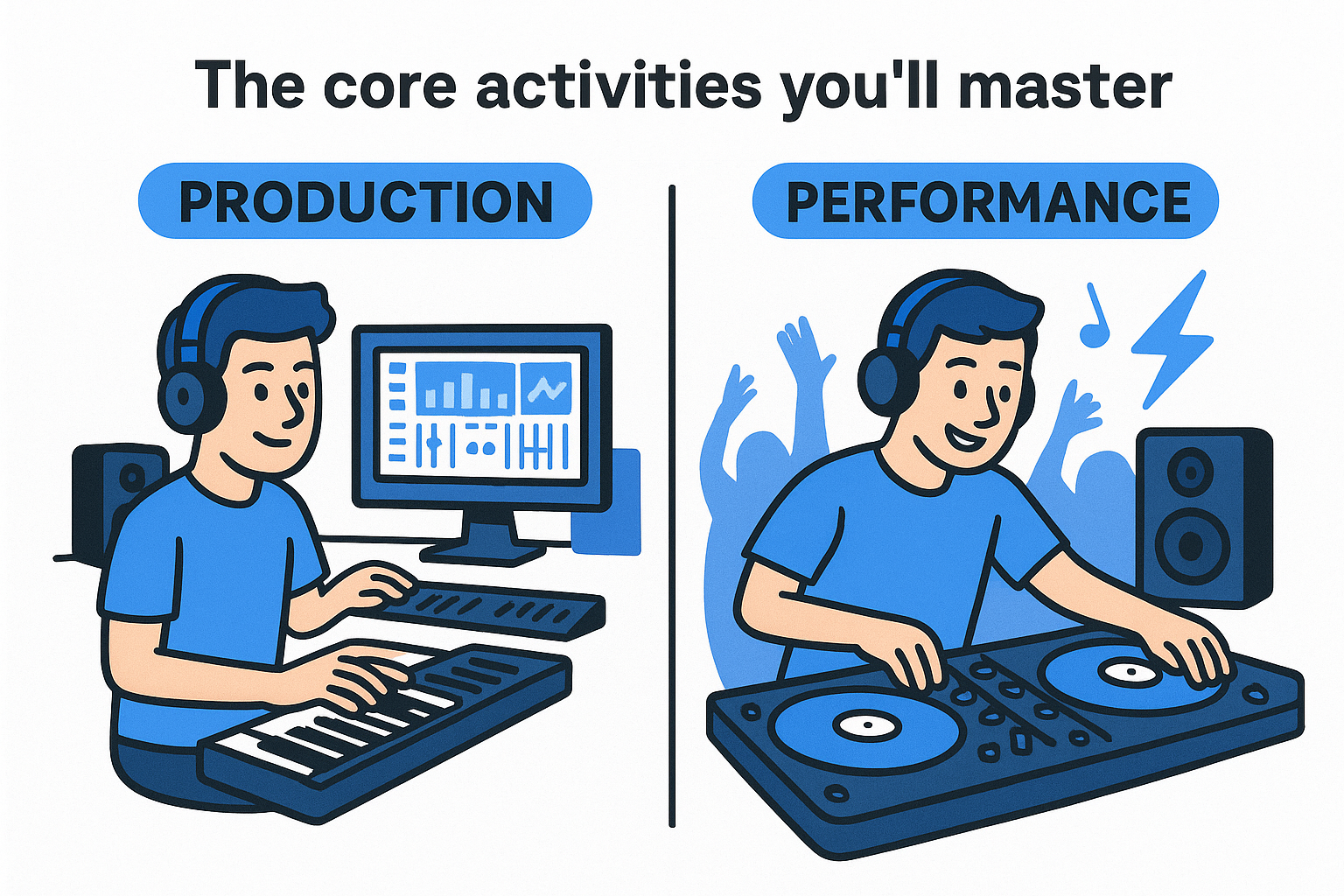
Performance brings your music to crowds at clubs, festivals, and parties. You mix your tracks with other music using DJ equipment or trigger your own sounds live with controllers and synthesizers. The goal is to read the room's energy and keep people dancing by selecting the right songs at the right moments. Live performance requires different skills than production: reading crowds, smooth transitions between tracks, and maintaining energy throughout your set.
Your success depends less on natural talent and more on consistent practice and smart decisions about where to focus your limited time.
What you won't need to start
Understanding how to become an edm artist begins with clearing away myths about barriers to entry. You don't need a music degree or formal training to produce electronic music. Many top EDM artists taught themselves entirely through online tutorials, experimentation, and persistence. You also don't need expensive studio equipment or a soundproofed room when you're starting out. A decent laptop, production software, and basic headphones get you making music today. Industry connections help later but aren't required to begin learning and creating. Your first priority is building skills and finishing tracks, not networking or branding yourself as an artist.
Step 1. Choose your path and goals
Your first decision shapes everything that follows. Before you buy any equipment or download software, you need to clarify what kind of EDM artist you want to become and what you want to achieve in your first three months. Clear goals prevent wasted time on skills that don't serve your vision, and choosing a primary path helps you focus limited practice hours on the abilities that matter most for your specific ambitions.
Decide between producer, DJ, or both
Producers spend most of their time making original tracks in software, learning sound design, arrangement, and mixing. You build songs from nothing, experimenting with melodies, drums, and effects until you create something uniquely yours. DJs focus on selecting and mixing existing tracks, reading crowds, and creating seamless transitions that keep people dancing. You perform other artists' music alongside your own productions, mastering beatmatching, EQing, and crowd control. Most successful artists eventually do both, but learning how to become an edm artist works better when you pick one primary focus for your first six months. Choose production if you love creating and don't mind spending months alone perfecting your craft. Choose DJing if you're eager to perform quickly and want faster results from practice.
Master one path first rather than splitting your attention equally between production and performance from day one.
Set realistic 90-day goals
Ninety days gives you enough time to make real progress without overwhelming yourself with long-term pressure. Your first quarterly goal should focus on finishing projects rather than achieving plays, followers, or bookings. Write down one specific, measurable target that sits within your control. Production-focused artists might aim to finish six complete tracks in 90 days, averaging one every two weeks. DJ-focused artists could target performing three guest sets at local venues or recording six practice mixes. Break your 90-day goal into monthly milestones that build progressively. For example, Month 1: Learn your software and make two rough tracks. Month 2: Apply feedback and finish two polished tracks. Month 3: Release your tracks online and make two more. This structure keeps you accountable while preventing the paralysis that comes from vague goals like "get better at production" or "become a famous DJ."
Step 2. Set up your starter studio
You need three things to start making EDM: a computer, production software, and something to listen through. Nothing else matters for your first six months. Skip the expensive studio monitors, MIDI keyboards, audio interfaces, and synthesizer hardware that manufacturers want you to believe are essential. Learning how to become an edm artist starts with mastering software and finishing tracks, not collecting gear. Your budget should focus on a reliable computer and quality production software, with everything else coming later once you understand what you actually need based on real production experience.
Pick your computer and DAW
Any laptop or desktop from the past five years with at least 8GB RAM and an Intel i5 processor (or equivalent) handles music production software without problems. Windows and Mac both work perfectly fine for EDM production, so use whatever you already own rather than buying new hardware. Your Digital Audio Workstation (DAW) forms the center of your production setup. Ableton Live, FL Studio, and Logic Pro (Mac only) dominate the EDM world because they offer intuitive workflows for electronic music and include solid built-in instruments and effects. Ableton Live costs $449 for the Standard edition or $99 for the limited Intro version. FL Studio ranges from $99 to $499 depending on the edition. Logic Pro costs $199.99 but only runs on Mac computers.
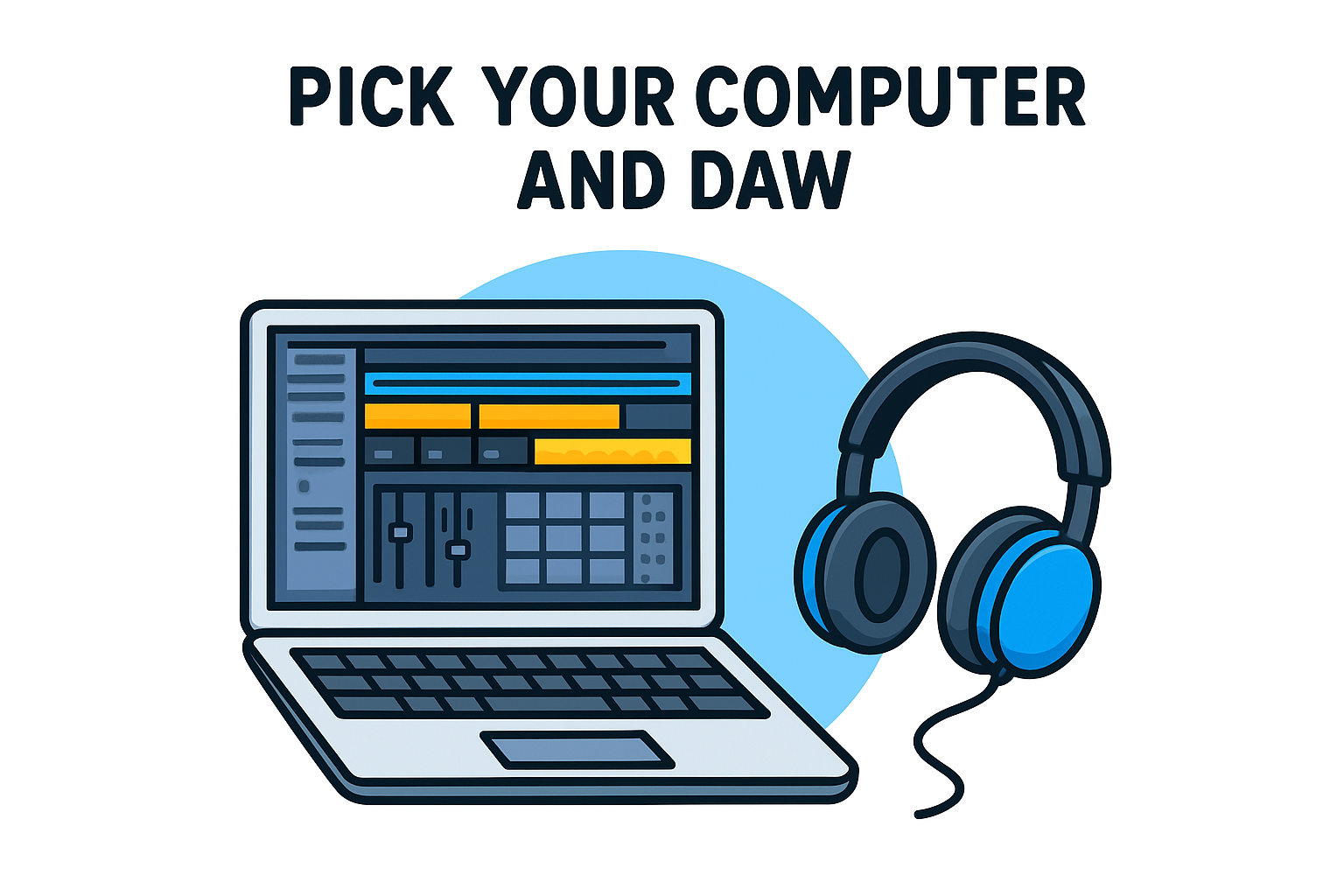
Choose your DAW based on which interface feels most natural when you try the free trial, not based on what your favorite artist uses.
Download free trials of Ableton Live and FL Studio before purchasing anything. Spend two hours in each DAW following a basic tutorial to understand which workflow clicks with your brain. Most producers stick with their first DAW for years, so this choice matters. Your learning curve steepens if you switch later. Pick the Standard or Producer edition of whichever DAW you choose, since the cheapest versions limit track counts and features in frustrating ways once you progress beyond absolute basics.
Get decent headphones
Studio monitors (speakers) require acoustic treatment and proper positioning to sound accurate, making them impractical for beginners. Closed-back headphones let you produce anywhere without disturbing others and give you consistent sound regardless of your room's acoustics. Audio-Technica ATH-M50x headphones cost around $149 and deliver flat, accurate sound that translates well when you export your tracks. Avoid bass-heavy consumer headphones like Beats or Skullcandy, which color the sound and lead you to make poor mixing decisions. Sony MDR-7506 headphones offer a cheaper alternative at $99 while maintaining professional quality. Your headphones will become your most-used piece of equipment, so invest here rather than in flashy gear that sits unused.
Step 3. Learn your tools and EDM basics
Your DAW sits open on your screen but you don't know which buttons do what or how to actually make a song from scratch. Structured learning beats random experimentation when you're starting out. Spend your first two weeks learning your software's core functions and basic music concepts that apply specifically to electronic dance music. You need enough knowledge to translate ideas in your head into actual sounds, but you don't need to master every feature before making your first track. Focus on the fundamental tools you'll use in every project, and understand just enough music theory to make your tracks sound intentional rather than random.
Master your DAW's interface and workflow
Open your DAW every day for at least one hour during your first two weeks. Watch the official beginner tutorial series from your DAW's manufacturer, which teaches the interface systematically rather than jumping around topics. Ableton offers its "Learning Music" interactive course for free, while FL Studio provides comprehensive video tutorials in their help menu. Learn these core functions first: how to create and delete tracks, load instruments and samples, use the piano roll or MIDI editor, record and edit audio, arrange clips or patterns in your timeline, and export finished projects. Practice each function immediately after learning it by completing small exercises. Create a four-bar drum pattern. Program a simple bassline. Load a sample and chop it into pieces. These mini-projects build muscle memory faster than passive watching.
Your goal is comfortable navigation, not memorizing every menu option or keyboard shortcut your DAW offers.
Study basic music theory for EDM
Electronic dance music relies on specific theory concepts that keep your tracks sounding musical rather than random. Learn the major and minor scales first, understanding which notes sound good together in a key. Most EDM tracks stick to one key throughout, making this knowledge immediately practical. Study basic chord progressions that drive popular EDM tracks: I-V-vi-IV, vi-IV-I-V, and i-VII-VI-VII for minor keys. YouTube tutorials on "EDM chord progressions" or "music theory for producers" explain these patterns with visual examples you can copy into your DAW. Memorize common drum patterns for your target genre by loading professional tracks into your DAW and mapping out where kicks, snares, and hi-hats hit. House music typically places kicks on every quarter note. Dubstep centers around half-time drum patterns at 140 BPM. Copy these patterns exactly in your first projects until you internalize the rhythmic feel of your chosen style.
Learn from tutorials and deconstruction
Following step-by-step production tutorials teaches you complete workflows from start to finish. Search YouTube for "beginner [your genre] tutorial" and watch producers build tracks from empty projects to finished songs. Pause the video after each step and replicate their actions in your own DAW before continuing. This active following beats passive watching by forcing you to solve problems when your result doesn't match theirs. Download free project files from tutorial websites and study how professional producers organize their sessions, layer sounds, and arrange their tracks. Look at which effects they apply to each element and how they automate parameters over time. Deconstruct tracks you love by importing them into your DAW and placing markers at each section change. Note how long the intro lasts, when the drop hits, and how producers build tension before releasing energy. Understanding how to become an edm artist requires studying the architecture of successful tracks and copying their structures until you internalize the format.
Step 4. Write and finish your first tracks
Theory and tutorials taught you the tools, but making actual music develops your real skills. Your first tracks will sound rough and amateur, which is exactly what they should be at this stage. The goal of your initial projects is finishing complete songs from intro to outro, not creating masterpieces. Completing ten mediocre tracks teaches you more than spending three months perfecting one song. Start your first project today by opening your DAW with a clear plan, simple structure, and commitment to finish within one week regardless of how it sounds.
Start with templates and constraints
Open a new project and set strict limitations before you place a single sound. Choose your key (C minor works well for dark EDM), your tempo (128 BPM for house, 140 for dubstep), and your total track length (three minutes maximum). These constraints prevent the paralysis of infinite options. Load a reference track in your genre and study its structure by placing markers at each section change. Copy this exact structure into your project as empty blocks: Intro (16 bars), Verse (16 bars), Build (8 bars), Drop (16 bars), Breakdown (16 bars), Build (8 bars), Final Drop (16 bars), Outro (8 bars). Many DAWs include project templates with pre-loaded instruments and effects. Use these starter templates for your first three tracks to skip technical setup and jump straight into creating melodies and drums.
Finishing a simple track this week beats starting the perfect track you'll abandon next month.
Work in focused two-hour sessions
Block out two uninterrupted hours for each production session. Turn off your phone, close your browser, and work on one specific element until that session ends. Day 1: Program your drum pattern for the entire track. Day 2: Write your bassline and main melody. Day 3: Add supporting elements like pads, plucks, or vocals. Set a timer and force yourself to make decisions quickly rather than endlessly tweaking sounds. When your timer hits two hours, save your project and walk away until tomorrow. This approach prevents burnout and gives your ears rest between sessions. Understanding how to become an edm artist means building the discipline to show up consistently rather than working in random bursts when inspiration strikes.
Finish every project you start
Your first five tracks will sound weak compared to professional releases. Export them anyway and move to the next project instead of spending weeks trying to fix fundamental problems you don't yet know how to solve. Set a firm deadline of seven days per track during your first month. When day seven arrives, export your track as a WAV file even if you hate parts of it. Each finished project teaches you lessons that sitting in an endless work-in-progress limbo never will. You'll notice patterns in your weaknesses across multiple completed tracks, which shows you exactly what skills to practice next. Keep a production journal noting one thing that worked well and one thing to improve in each finished track. This written record helps you track actual progress when imposter syndrome makes you feel like you're not improving.
Step 5. Develop your sound and identity
You've finished several tracks but they sound generic and forgettable. Your productions blend into the thousands of other beginner EDM tracks floating around online because you haven't defined what makes your music uniquely yours. Developing a recognizable sound and artist identity separates you from the crowd and gives fans something specific to connect with. Start this process after completing your first five tracks, once you understand your strengths and natural preferences. Your signature sound emerges from conscious choices about which elements to emphasize, which genres to blend, and which production techniques to use repeatedly across your releases.
Find your signature elements through experimentation
Study your completed tracks and identify patterns in what you naturally gravitate toward. Do you always add vocal chops to your drops? Do your basslines follow similar melodic patterns? Do you prefer dark minor keys over bright major scales? These recurring choices form the foundation of your signature sound. Lean into these preferences intentionally in your next three tracks by exaggerating them. If you love vocal chops, make them the centerpiece of every drop. If your basslines carry your tracks, spend extra time crafting unique bass sounds that become your calling card. Create a personal sample library containing your five favorite drum sounds, three go-to synthesizer presets, and ten effects chains that you love. Use these same elements across multiple tracks to build sonic consistency.
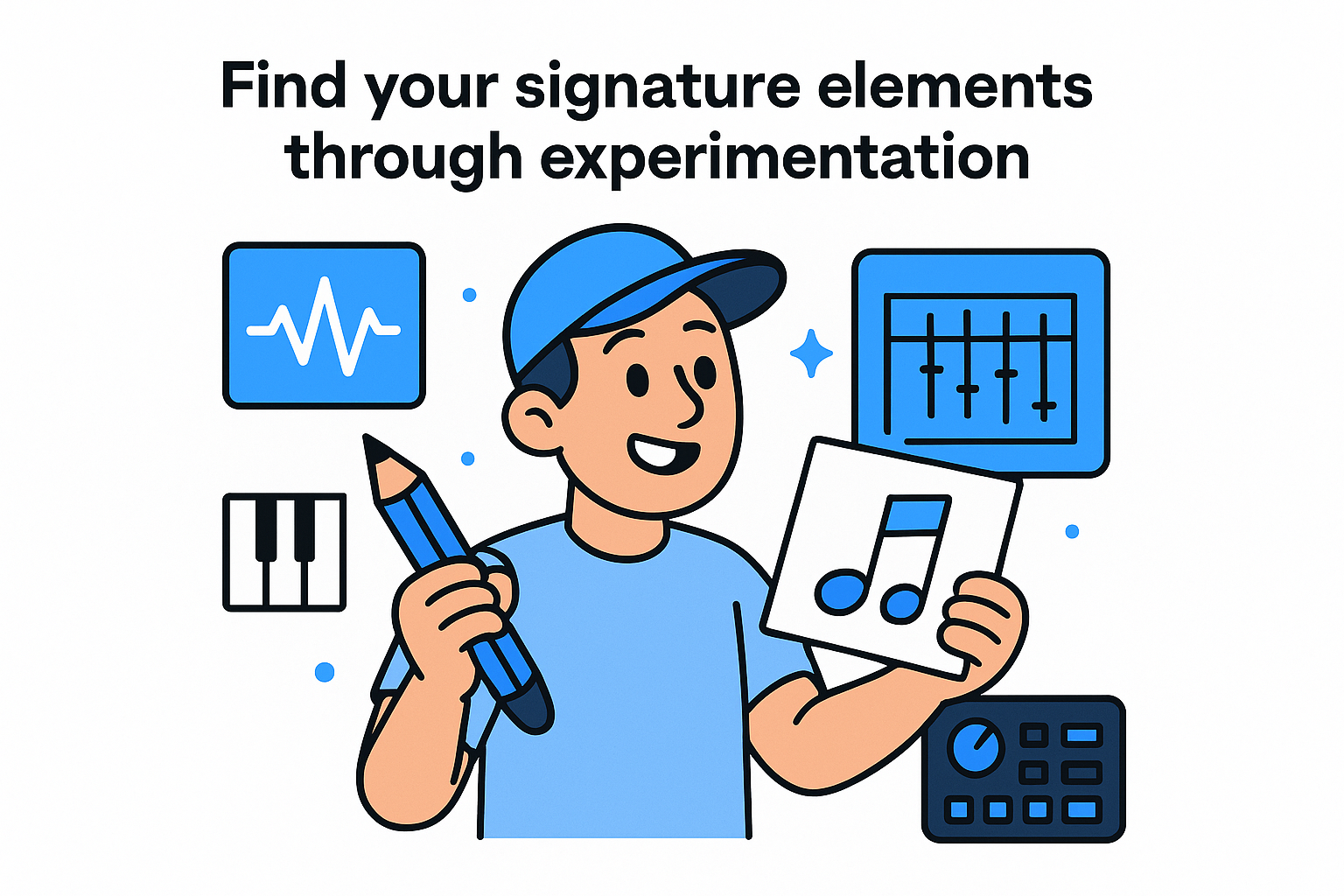
Your signature sound develops faster when you intentionally repeat successful elements rather than starting from scratch with each new track.
Blend two genres that rarely intersect to create something fresh. Combine deep house grooves with dubstep bass design, or fuse trance melodies with trap drums. Listen to artists who successfully merge styles and note which elements they borrow from each genre. Understanding how to become an edm artist includes finding your niche by experimenting with unusual combinations until you discover a blend that excites you and sounds different from mainstream productions. Record these experiments in your production journal, noting which combinations worked and which felt forced.
Build consistent branding early
Choose your artist name carefully because changing it later confuses your growing audience. Pick something memorable, easy to spell, and available across social media platforms. Search your proposed name on Instagram, SoundCloud, and Spotify before committing to ensure you can secure consistent handles everywhere. Create simple visual branding using free tools that matches your music's energy. Dark, minimal artwork suits techno and deep house, while bright, colorful designs fit big room and progressive house. You don't need a professional designer yet, but your track covers and profile pictures should follow a consistent color palette and style. This visual consistency helps listeners recognize your releases instantly when scrolling through feeds. Write a three-sentence bio explaining your musical style and what makes you different. Keep this bio consistent across all platforms so new listeners immediately understand what kind of music you make and why they should care.
Step 6. Release music and grow online
Your finished tracks sit on your hard drive doing nothing because you fear releasing imperfect work into the world. Publishing your music online marks the shift from bedroom producer to actual artist that people can discover, follow, and support. You don't need a record label, radio play, or thousands of dollars in marketing budget to start building an audience. Free distribution platforms and social media give you direct access to potential fans worldwide. Start releasing your tracks within two weeks of finishing them rather than hoarding a collection of unreleased music while you wait for everything to sound perfect.
Choose your release platforms strategically
Upload your first three tracks to SoundCloud as your primary platform because it focuses specifically on electronic music and connects you with other producers and DJs. Create a free account and set your tracks to public with tags matching your genre, mood, and influences. Use all available tag slots with specific terms like "melodic techno," "bass house," or "progressive trance" rather than generic words like "EDM" or "electronic." Your track descriptions should include the BPM, key, and a brief story about what inspired the track or how you made it. Spotify distribution requires a digital distributor like DistroKid, TuneCore, or CD Baby, which cost between $20 to $50 annually. Wait until you have five solid tracks before paying for Spotify distribution, since singles disappear quickly without a catalog backing them up. Focus your first three months on building a SoundCloud following and improving your production quality before investing in wider distribution.
Release consistently on a schedule rather than sporadically when you feel inspired, because algorithms reward regular activity with better visibility.
Create a release schedule that builds momentum
Commit to releasing one new track every two weeks during your first six months. This rapid release schedule forces you to finish projects instead of endlessly tweaking them and gives your audience regular content to engage with. Mark release dates on your calendar two weeks in advance and work backward from each deadline. Week 1: Finish production and initial mixdown. Week 2: Final mixing, export, create artwork, write description, and upload. Batch your releases by producing multiple tracks before starting the release cycle, so technical problems or creative blocks don't derail your schedule. Understanding how to become an edm artist means treating releases like professional obligations rather than waiting for perfect moments or inspired feelings.
Grow your audience through smart promotion
Post a 15-second clip of your track's drop on Instagram and TikTok three days before your full release. These short videos capture attention faster than asking people to click away to streaming platforms. Include text overlay explaining your creative process or technical challenge you solved in that specific section. Tag your genre and location in every post to increase discoverability beyond your existing followers. Share your new releases in genre-specific subreddits like r/edmproduction, r/House, or r/Techno with thoughtful context about your track rather than spamming links. Engage genuinely with other artists' posts before sharing your own music to build goodwill within these communities. Send your track to five Spotify playlist curators whose playlists match your style using this template:
Subject: New [Genre] Track for [Playlist Name]

Hi [Curator Name],

I'm [Your Artist Name], an EDM producer from [Location].
My new track "[Track Name]" ([BPM] BPM, [Key]) fits the
vibe of [Playlist Name] with its [describe 2-3 specific
elements like "rolling bassline" or "atmospheric pads"].

Listen here: [Link]

Thanks for your time,
[Your Name]
Track which promotion methods bring the most plays and followers by checking your analytics weekly, then double down on tactics that work and drop strategies that waste your time.
Step 7. Network, collaborate and get feedback
Your tracks improve faster when other producers review your work and share techniques you haven't discovered yet. Isolating yourself in your bedroom studio creates blind spots in your production..
3